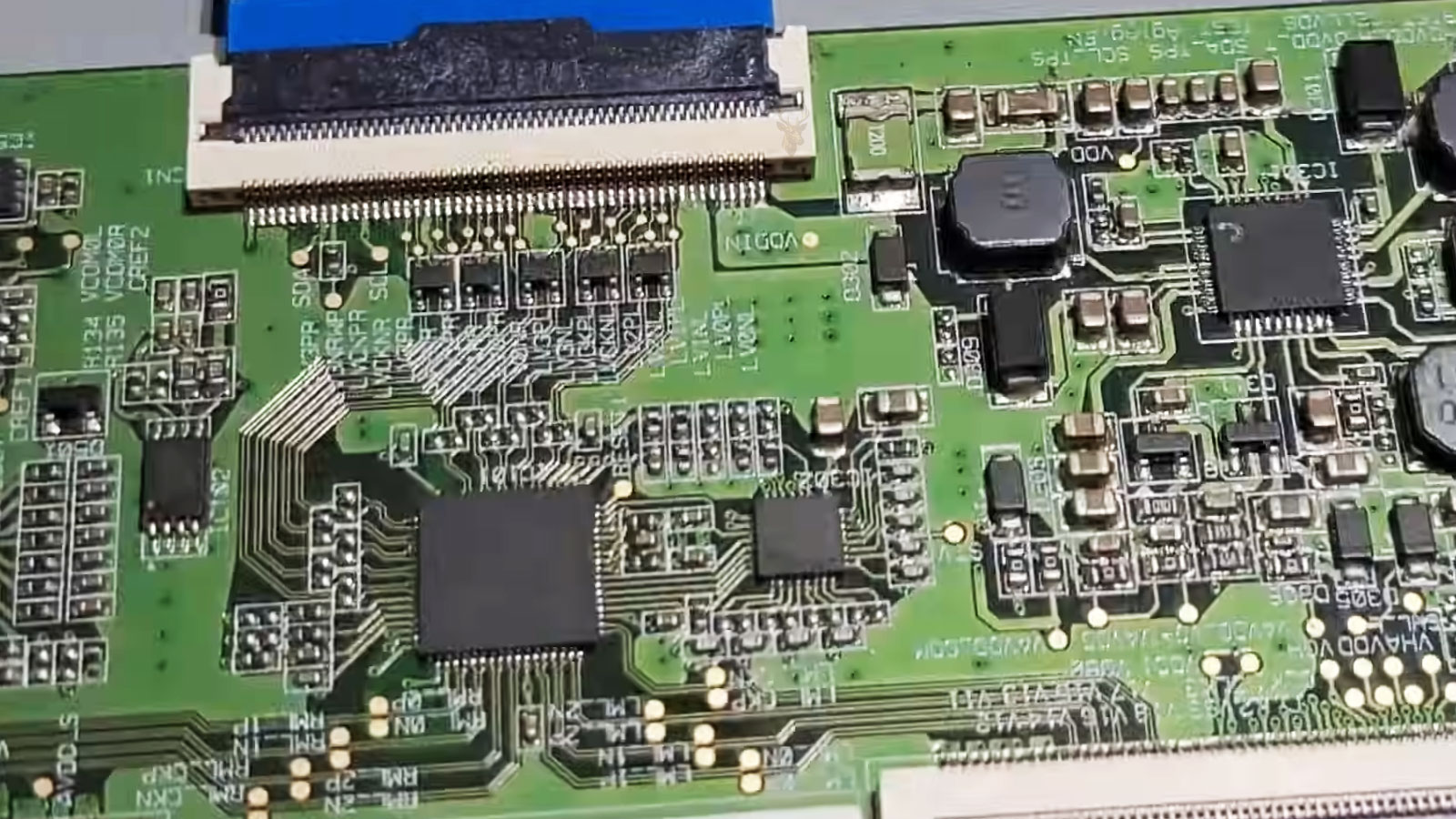
Understanding the Electronics That Coordinate Every Pixel
Modern LCD panels display millions of individual pixels that must change state with remarkable precision. Every frame shown on the screen depends on carefully coordinated electrical signals reaching the correct rows and columns at exactly the right moment. The component responsible for organizing this process is the Display Timing Controller, commonly known as the TCON.
Although users rarely see or hear about the TCON, it serves as an important bridge between the incoming display data and the panel itself. Rather than generating images, it converts incoming information into the precise timing sequences required for the LCD panel to refresh accurately and consistently.
Whether the display is built into a laptop, desktop monitor, all-in-one computer, or many other LCD-based devices, the TCON helps ensure that every refresh cycle occurs in the proper order.
What Is a Display Timing Controller?
A Display Timing Controller is a specialized electronic circuit that manages how image data is delivered across the LCD panel. It receives digital video information from the display interface and translates that information into precisely timed electrical signals that control the individual rows and columns of pixels.
Instead of creating the image itself, the TCON acts as a traffic coordinator. It determines when various portions of the display receive their signals so that every part of the screen updates in the correct sequence.
| Component | Primary Responsibility |
|---|---|
| Graphics processor (GPU) | Creates and outputs image data |
| Display interface | Transfers digital image information |
| Display Timing Controller (TCON) | Coordinates timing signals for the LCD panel |
| LCD panel | Displays the finished image |
Why Timing Is So Important
An LCD panel contains millions of pixels arranged in a precise grid. These pixels cannot all be updated simultaneously. Instead, they are refreshed according to a carefully controlled sequence that repeats continuously while the display remains active.
If this timing were inaccurate, pixels could receive information too early, too late, or in the wrong order. Maintaining consistent timing allows each refresh cycle to occur smoothly, producing a stable image that appears continuous to the viewer.
The TCON is responsible for coordinating when image information reaches different parts of the display, not for creating the image itself.
The TCON Works Alongside Other Display Components
The display system consists of multiple specialized components working together. The graphics processor generates image data, the display interface carries that information to the panel, and the Display Timing Controller organizes how the LCD electronics receive it. Each component performs a different function within the overall display process.
- The GPU renders graphical information.
- The display interface transports digital image data.
- The TCON generates precise timing sequences.
- The LCD panel converts those electrical signals into visible images.
Where the TCON Is Located
In many modern LCD designs, the Display Timing Controller is integrated directly into the display assembly rather than existing as a separate, easily removable component. Depending on the display’s design, it may be located on a dedicated circuit board or incorporated into other electronics within the panel itself.
This close integration reduces signal travel distances while allowing the controller to communicate efficiently with the display’s row and column driver circuits.
Every Refresh Cycle Depends on Precise Coordination
Each time the display refreshes, the Timing Controller helps organize the sequence of electrical activity across the panel. This process repeats many times every second, allowing millions of pixels to change state in a controlled and predictable manner while producing the stable images expected from modern LCD technology.
How the TCON Communicates With the LCD Panel
Once digital image information reaches the display assembly, the Display Timing Controller organizes how that information is distributed across the LCD panel. Rather than sending data randomly, the controller follows an exact sequence that allows every portion of the display to update in synchronization.
The TCON works closely with the row and column driver circuits that control individual sections of the panel. Together, these circuits ensure that pixels receive the correct electrical signals during each refresh cycle.
| Display Component | Function |
|---|---|
| Display interface | Transfers digital image data to the display assembly |
| Display Timing Controller (TCON) | Organizes timing and synchronization |
| Row driver circuits | Activate individual rows of pixels |
| Column driver circuits | Apply image information to each column |
Refreshing Millions of Pixels in Sequence
An LCD display may contain several million pixels, depending on its resolution. Updating every pixel requires a carefully organized scanning process that repeats continuously while the display remains active. The TCON coordinates this process so the panel refreshes one section after another with precise timing.
Although each refresh cycle happens extremely quickly, maintaining the correct order allows the entire image to appear stable and continuous to the human eye.
The Timing Controller continuously coordinates refresh operations, allowing millions of pixels to work together as a single image.
Resolution and Refresh Rate Influence TCON Operation
As display technology has advanced, LCD panels have increased both their resolution and refresh rate. Higher resolutions require the controller to manage more pixels, while higher refresh rates require the entire process to repeat more frequently.
Whether a display operates at standard or high refresh rates, the Timing Controller must maintain precise synchronization throughout every refresh cycle to support stable image reproduction.
- Higher resolutions increase the number of pixels being managed.
- Higher refresh rates increase how often synchronization occurs.
- Accurate timing helps maintain consistent image stability.
- Every refresh cycle follows a carefully controlled sequence.
Modern Panels Continue Integrating More Electronics
Display technology has evolved significantly over the years. Earlier LCD designs often separated various control functions onto multiple circuit boards, while many modern displays integrate additional electronics directly into the panel assembly. This integration helps reduce complexity, improve efficiency, and conserve space within increasingly thin laptops and monitors.
Although implementation varies among manufacturers, the fundamental responsibility of the Timing Controller remains the same: coordinating the electrical timing required for accurate image presentation.
The TCON Does Not Replace the Graphics Processor
Because both components participate in producing the final image, the Graphics Processing Unit (GPU) and the Display Timing Controller are sometimes confused with one another. In reality, they perform separate functions. The GPU creates and processes graphical content, while the TCON prepares the panel to display that information using precisely timed electrical signals.
| Graphics Processor (GPU) | Display Timing Controller (TCON) |
|---|---|
| Processes graphics and video | Coordinates panel timing |
| Generates image data | Synchronizes display refresh operations |
| Operates as a computing processor | Operates as a dedicated display controller |
| Supplies completed image information | Directs how the panel receives that information |
Accurate Synchronization Produces Stable Images
The quality of an LCD image depends on more than the display panel itself. Accurate synchronization between incoming image data and the panel’s electrical operation allows each frame to be presented consistently. The Timing Controller serves as the coordinator for this process, ensuring that the panel refreshes according to the timing requirements established by its design.
The TCON Helps Maintain Consistent Image Quality
Every frame displayed on an LCD panel depends on consistent electrical coordination. By managing the timing of signal delivery across the display, the Timing Controller helps ensure that pixels update in the intended sequence while maintaining synchronization throughout the panel. This continuous coordination contributes to stable image reproduction during normal operation.
Because modern displays refresh many times each second, the controller performs these operations repeatedly throughout the entire time the display remains active.
Different LCD Panels Use Different TCON Designs
Although the basic purpose of a Display Timing Controller remains consistent, its implementation varies between manufacturers and display technologies. Different panel sizes, resolutions, refresh rates, and internal architectures require controller designs that match the electrical characteristics of each specific LCD panel.
As a result, Timing Controllers are designed as part of the overall display assembly rather than as universal components that can be exchanged freely between unrelated panels.
| Display Characteristic | Influence on TCON Design |
|---|---|
| Panel resolution | Determines how many pixels must be coordinated |
| Refresh rate | Affects how frequently synchronization occurs |
| Panel architecture | Determines communication with display driver circuits |
| Physical display size | Influences overall electrical design |
The Controller Operates Automatically
Unlike software features that users can configure, the Display Timing Controller performs its work automatically whenever the display is operating. There are no user settings that directly control its normal operation because its functions are built into the display hardware itself.
This dedicated operation allows the controller to continuously coordinate panel timing without requiring user interaction or operating system management.
The Timing Controller performs its synchronization functions automatically as part of the display’s normal hardware operation.
Display Technology Continues to Evolve
As display technology advances, manufacturers continue increasing resolutions, improving refresh rates, reducing power consumption, and producing thinner panel assemblies. These developments require increasingly sophisticated display electronics that can coordinate larger amounts of image data while maintaining precise synchronization across millions of pixels.
Although display technologies continue to evolve, the fundamental purpose of the Timing Controller remains the same: organizing the precise electrical timing that allows the LCD panel to present a stable and accurate image.
Why Timing Controllers Matter
The Display Timing Controller is one of the essential electronic components found within modern LCD panels. Working behind the scenes, it coordinates the timing signals that allow millions of pixels to refresh in the correct sequence while maintaining synchronization throughout the display. Although it operates independently of the graphics processor and remains invisible to most users, its role is fundamental to reliable image presentation. Understanding how the TCON fits within the overall display system provides valuable insight into the sophisticated engineering that allows today’s laptop and desktop displays to produce stable, high-quality images.