Dividing PCI Express Lanes Across Multiple Devices
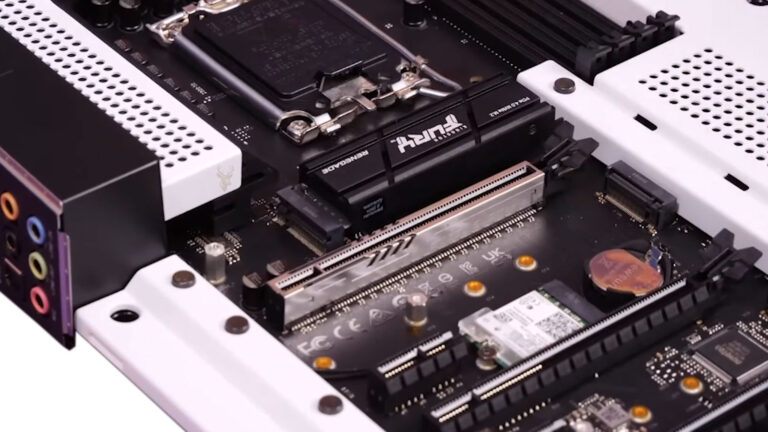
PCI Express expansion slots allow a computer to connect graphics cards, storage controllers, network adapters, capture cards, and many other devices directly to the motherboard. Each slot receives a specific number of PCI Express lanes that carry data between the installed device and the rest of the system.
PCIe bifurcation is the process of dividing one larger group of PCI Express lanes into several smaller groups. Instead of assigning every lane from a slot to one expansion device, a compatible motherboard can distribute those lanes across multiple devices connected through the same physical slot.
This capability is especially useful with expansion cards that hold several NVMe solid-state drives. However, successful bifurcation depends on support from the processor, motherboard, firmware, expansion card, and installed devices.
PCI Express Lanes Form Independent Data Paths
A PCI Express lane consists of dedicated pathways for sending and receiving information. Multiple lanes can operate together to provide greater communication bandwidth to an expansion device.
PCIe connections are commonly described using widths such as x1, x4, x8, and x16. The number indicates how many lanes are assigned to the connection rather than the physical length of the card alone.
| PCIe connection width | Number of assigned lanes | Typical examples |
|---|---|---|
| x1 | One lane | Sound cards, USB controllers, basic network adapters |
| x4 | Four lanes | NVMe drives, storage controllers, high-speed network cards |
| x8 | Eight lanes | Advanced network adapters, accelerator cards, some graphics cards |
| x16 | Sixteen lanes | Graphics cards and multi-device expansion cards |
A physically long x16 slot does not always receive sixteen active lanes. Motherboard design, processor limitations, and the use of other slots can reduce the number of lanes electrically connected to it.
Bifurcation Changes Lane Allocation Rather Than Lane Speed
PCIe bifurcation does not create additional lanes or make the PCI Express connection operate faster. It changes how an existing group of lanes is divided among connected devices.
A slot receiving sixteen lanes may normally operate as one x16 connection. With compatible bifurcation support, those same lanes may be divided into two x8 connections or four x4 connections.
Bifurcation divides the lanes already available to a slot; it does not increase the total number of lanes provided by the processor or motherboard.
| Possible lane configuration | General use |
|---|---|
| x16 | One device receives all sixteen lanes |
| x8/x8 | Two devices each receive eight lanes |
| x8/x4/x4 | Three devices receive differently sized lane groups |
| x4/x4/x4/x4 | Four devices each receive four lanes |
Multi-NVMe Adapter Cards Commonly Depend on Bifurcation
One of the most common uses for PCIe bifurcation is an adapter card designed to hold multiple M.2 NVMe drives. Each NVMe drive generally requires its own PCIe connection, commonly using four lanes.
A four-drive adapter installed in an x16 slot may need the motherboard to divide the slot into four independent x4 groups. Each group is then assigned to one drive on the adapter.
- The first x4 lane group communicates with the first NVMe drive.
- The second x4 lane group communicates with the second drive.
- The third group serves the third drive.
- The fourth group serves the final drive.
Without compatible bifurcation, the computer may recognize only one drive because the motherboard continues treating the slot as a single PCI Express connection.
Passive Adapter Cards Do Not Divide Lanes Themselves
Many multi-drive adapter cards are passive devices. They contain connectors and circuit traces that route the motherboard’s PCI Express lanes to individual drives, but they do not contain a controller capable of dividing one connection into several independent connections.
These cards depend entirely on the motherboard and processor to perform bifurcation. If the platform cannot divide the lanes, the passive adapter cannot compensate for the missing capability.
This distinction is important because two adapter cards that look similar may operate very differently depending on their internal design.
Active Adapter Cards Include a PCIe Switch
An active expansion card may contain a PCI Express switch that manages communication between several devices and one host connection. The switch allows multiple connected devices to share the available upstream lanes without requiring the motherboard to divide the slot into separate lane groups.
Because the card performs the distribution internally, an active adapter can support multiple devices on systems that do not provide the required bifurcation setting. However, these cards are generally more complex and may require additional power or cooling.
| Adapter design | How multiple devices are managed |
|---|---|
| Passive adapter | Depends on motherboard bifurcation |
| Active adapter | Uses an onboard PCIe switch |
| Controller-based storage card | Uses a storage controller to manage attached drives |
An active switch does not create unlimited bandwidth. Every attached device still shares the bandwidth available through the card’s upstream PCI Express connection.
Processor Design Determines the Available Lane Groups
Many primary PCI Express lanes originate directly from the processor. These lanes are often intended for a graphics card or another high-bandwidth device installed in the main expansion slot.
The processor architecture determines how those lanes can be organized. Some platforms allow sixteen lanes to operate as x16 or x8/x8, while others may also support x4/x4/x4/x4. A motherboard cannot provide a bifurcation arrangement that the processor itself does not support.
Different processor models within the same general product family may also provide different lane counts or division options.
Motherboard Wiring Must Match the Intended Configuration
Processor support alone is not enough. The motherboard must physically route the required lanes to the selected slot and expose the appropriate firmware controls.
A motherboard may include several full-length slots even though only the top slot receives sixteen processor lanes. Another slot may receive four lanes from the chipset, while a third slot may share lanes with storage ports or other onboard devices.
- Slot length does not confirm electrical lane count.
- Some slots share lanes with other expansion slots.
- Certain M.2 connectors can disable or reduce expansion-slot lanes.
- Chipset-connected slots may have different bifurcation capabilities.
The motherboard manual is often the clearest source for determining which slots support lane division and what happens when several devices are installed at the same time.
Firmware Settings Control the Lane Arrangement
Compatible motherboards typically include a UEFI firmware setting that controls how lanes are assigned to a PCI Express slot. The setting may appear under advanced, chipset, onboard devices, or PCI Express configuration menus.
The available choices depend on the platform. A firmware menu may offer options such as Auto, x16, x8/x8, or x4/x4/x4/x4. Selecting the wrong configuration can prevent one or more devices from being detected.
Some motherboards expose bifurcation settings only for specific slots. Others configure the lanes automatically when supported expansion hardware is detected.
Lane Sharing Can Change Other Hardware Connections
Computer platforms provide a limited number of PCI Express lanes. Installing a device or changing a lane configuration may affect other slots, M.2 connectors, SATA ports, or onboard controllers that share those resources.
For example, installing a multi-drive adapter in a secondary expansion slot may disable another slot or reduce its connection width. Using a particular M.2 socket may also cause a PCIe slot to operate with fewer lanes.
These changes are usually part of the motherboard’s intended design rather than evidence of a hardware failure.
Graphics Cards Can Be Affected by Lane Allocation
The primary graphics card often uses the largest group of processor-connected PCI Express lanes. Installing another high-bandwidth device may cause the motherboard to divide those lanes between two slots.
A graphics card that normally operates at x16 may change to x8 when another compatible expansion card is installed. Whether this affects performance depends on the graphics card, PCI Express generation, workload, and amount of data crossing the connection.
Bifurcation should therefore be planned as part of the entire system configuration rather than evaluated only from the perspective of the newly installed device.
Device Detection Depends on Correct Lane Assignment
When the firmware divides a slot correctly, each connected device appears as an independent PCI Express device. The operating system can then detect the drives, controllers, or other expansion hardware separately.
If the lane arrangement does not match the adapter design, symptoms may include missing drives, partially detected hardware, or devices that appear only in certain adapter positions.
PCIe bifurcation also involves slot wiring, bandwidth sharing, multi-drive performance, passive and active adapter behavior, and the reasons some expansion devices remain undetected even when the motherboard includes a PCIe bifurcation setting.
Bandwidth Is Shared Across the Available Lanes
Although PCIe bifurcation allows multiple devices to communicate through one physical expansion slot, it does not create additional PCI Express bandwidth. The total number of lanes available to the slot remains unchanged and must be shared according to the selected lane configuration.
For example, if a x16 slot is divided into four independent x4 connections, each attached device receives four dedicated lanes instead of all sixteen. Every device communicates independently, but no individual device has access to more lanes than were assigned during the bifurcation process.
This approach works well for hardware that naturally operates using four PCI Express lanes, such as most NVMe solid-state drives.
Multiple NVMe Drives Can Operate Simultaneously
One of the primary advantages of PCIe bifurcation is the ability to install several NVMe drives on a single adapter card while allowing each drive to function as an independent storage device.
Once the motherboard assigns separate x4 lane groups, the operating system detects each drive individually. Storage management software can then create separate volumes, RAID arrays, or dedicated storage pools depending on the operating system and storage configuration.
| Configuration | Typical result |
|---|---|
| One x16 graphics card | Single device receives sixteen lanes |
| Four NVMe drives using x4/x4/x4/x4 | Each drive receives four dedicated lanes |
| Two high-speed devices using x8/x8 | Each device operates with eight lanes |
Passive Adapters Require Correct Firmware Configuration
Because passive adapter cards simply route electrical connections, they rely completely on the motherboard’s firmware to divide PCI Express lanes correctly. If bifurcation is disabled or configured incorrectly, the adapter cannot compensate for the missing lane assignment.
A common symptom is that only one installed NVMe drive appears during startup while the remaining drives remain undetected. This usually indicates that the slot is still operating as one large PCI Express connection rather than several independent ones.
A passive adapter distributes physical connections, but only the motherboard can divide PCI Express lanes through bifurcation.
PCIe Switches Operate Differently From Bifurcation
An active expansion card equipped with a PCI Express switch approaches the problem differently. Instead of asking the motherboard to divide its lanes, the onboard switch manages communication between several attached devices and the upstream PCI Express connection.
To the motherboard, the switch appears as a single PCI Express device. Internally, however, it distributes communication among multiple connected drives or expansion devices.
This design can provide compatibility on systems that lack bifurcation support, although the attached devices still share the available upstream bandwidth.
Drive Performance Depends on the Workload
Installing multiple NVMe drives on one adapter does not necessarily mean every drive will simultaneously operate at its theoretical maximum transfer speed. Actual performance depends on how the drives are being used.
If only one drive is actively transferring data, it may use most of its available PCI Express bandwidth. During simultaneous transfers involving several drives, the workload becomes distributed across the available lane groups and system resources.
- Reading one drive at a time places little demand on the remaining drives.
- Multiple active transfers increase total PCI Express traffic.
- Processor performance can influence storage workloads.
- Storage software may become another performance factor.
Chipset-Connected Slots Behave Differently
Not every PCI Express slot connects directly to the processor. Many motherboards provide additional slots through the chipset, which communicates with the processor using its own dedicated connection.
Although chipset-connected slots function normally for many expansion devices, they may provide different bandwidth characteristics, support different bifurcation options, or share resources with onboard storage, networking, or USB controllers.
This distinction explains why moving the same adapter card from one slot to another may produce different results.
Expansion Slot Sharing Can Disable Other Devices
Motherboard designers often reuse available PCI Express lanes across several connectors. As a result, enabling one slot or M.2 connector may automatically reduce bandwidth elsewhere or disable another connector entirely.
These design choices allow manufacturers to provide more expansion options than would otherwise be possible using the available processor and chipset lanes.
| Possible shared resource | Potential effect |
|---|---|
| M.2 storage connector | May disable certain SATA ports |
| Secondary PCIe slot | May reduce the primary slot from x16 to x8 |
| Chipset expansion slot | May share bandwidth with other onboard devices |
| Additional storage controller | May occupy available PCIe resources |
Operating Systems Detect Individual Devices
When bifurcation is configured successfully, each attached storage drive or expansion device appears independently during hardware detection. The operating system communicates with every device separately even though they occupy the same physical expansion slot.
This independent detection allows each drive to receive its own partitions, file systems, monitoring information, and health reporting without depending on the other devices installed on the adapter.
Device Placement on the Adapter Can Matter
Some expansion cards assign specific PCI Express lane groups to individual connector positions. If only one drive is installed, manufacturers may recommend placing it in a particular slot so it aligns with the first available lane group.
As additional drives are installed, each connector position receives its corresponding group of PCI Express lanes according to the adapter’s circuit layout.
Cooling Requirements Increase With Multiple NVMe Drives
Adding several high-performance NVMe drives to one expansion card can significantly increase heat generation inside the computer. While each drive manages its own temperature independently, placing multiple drives close together can reduce airflow and increase operating temperatures.
Many multi-drive adapters include heatsinks or support additional airflow to help maintain stable operating temperatures during sustained storage workloads.
Without adequate cooling, individual drives may reduce their operating speed through thermal throttling to protect internal components.
Firmware Documentation Helps Prevent Configuration Problems
Because every motherboard implements PCIe lane allocation differently, manufacturer documentation is often essential when planning a multi-device installation. Processor support, slot wiring, firmware options, and shared resources all influence the final hardware configuration.
Understanding these relationships before installing expansion hardware helps avoid situations where drives appear missing, slots become disabled, or lane assignments operate differently than expected.
Practical planning for PCIe bifurcation requires careful attention to compatibility, motherboard design, and lane allocation. Seemingly identical motherboards may behave differently, and understanding how PCIe lanes are distributed helps explain the expansion limits of modern computer systems.
Firmware Updates May Expand Hardware Compatibility
Motherboard manufacturers periodically release firmware updates that improve hardware compatibility, add new processor support, and refine PCI Express functionality. Some systems that originally lacked PCIe bifurcation options later gained additional lane configuration choices through updated firmware.
Updating firmware does not guarantee that bifurcation will become available because the processor and motherboard must already support the necessary hardware capabilities. However, newer firmware can improve stability, expose additional configuration options, or correct compatibility issues discovered after the motherboard was released.
Expansion Planning Begins Before Hardware Installation
PCIe bifurcation is most effective when expansion requirements are considered during the initial system planning process. Choosing a processor with sufficient PCI Express lanes, selecting a motherboard that supports the desired lane configurations, and verifying adapter compatibility help prevent unexpected limitations after assembly.
This planning becomes increasingly important in workstations and storage-focused computers where multiple NVMe drives, high-speed networking, capture hardware, or accelerator cards may need to operate simultaneously.
Successful PCIe expansion depends on the entire platform working together rather than any single hardware component.
Different Motherboards Can Produce Different Results
Two computers using the same processor may still support different PCIe bifurcation options because motherboard manufacturers design their products with different expansion priorities. Circuit routing, slot layouts, chipset resources, and firmware features all influence how PCI Express lanes are distributed.
For this reason, compatibility should always be verified using the documentation for the specific motherboard model rather than assuming that all boards built around the same chipset behave identically.
Server Platforms Often Offer More Flexible Lane Allocation
Enterprise servers and professional workstations frequently provide greater flexibility for PCI Express lane allocation than consumer desktop platforms. These systems are commonly designed to support large storage arrays, multiple network adapters, hardware accelerators, and other expansion devices operating at the same time.
Consumer motherboards, by comparison, often prioritize graphics performance while offering fewer lane configuration options for secondary expansion slots.
Bifurcation Does Not Replace RAID Controllers
PCIe bifurcation simply divides PCI Express lanes so multiple devices can communicate independently with the computer. It does not combine drives into a storage array or manage redundancy, caching, or advanced storage features.
Functions such as RAID management remain the responsibility of dedicated RAID controllers, operating system storage software, or storage controller hardware designed specifically for that purpose.
- Bifurcation divides PCI Express lane groups.
- RAID combines multiple drives for specific storage objectives.
- Storage controllers manage communication with attached drives.
- Each technology serves a different purpose within the system.
Expansion Cards May Require Additional Power
Some multi-device adapter cards, especially those containing PCI Express switches or several high-performance storage devices, include auxiliary power connectors. These connectors provide additional electrical power beyond what the motherboard slot alone can safely supply.
Whether additional power is required depends on the adapter’s design and the number of installed devices. Following the manufacturer’s installation recommendations helps ensure stable operation during sustained workloads.
Common Misconceptions About PCIe Bifurcation
Because PCIe bifurcation is often discussed alongside storage upgrades and workstation hardware, several misunderstandings frequently arise regarding what the technology actually accomplishes.
| Misconception | Reality |
|---|---|
| Bifurcation increases PCIe speed. | It only changes how existing lanes are assigned. |
| Every x16 slot supports bifurcation. | Support depends on the processor, motherboard, and firmware. |
| Passive adapters divide lanes automatically. | The motherboard performs lane division. |
| More devices create additional bandwidth. | All devices share the available PCI Express resources. |
Future Hardware Continues Increasing Expansion Flexibility
As processors, chipsets, and motherboard designs continue evolving, manufacturers regularly introduce new approaches to PCI Express resource management. Newer PCI Express generations provide higher communication bandwidth while maintaining the same fundamental concept of assigning lanes to connected devices.
Although bandwidth increases from one PCI Express generation to the next, proper lane allocation remains essential for ensuring that storage devices, graphics cards, and expansion hardware receive the resources they require.
Efficient Lane Allocation Supports Modern Computer Expansion
Modern desktop computers and workstations often combine graphics cards, multiple NVMe drives, networking hardware, capture devices, and other expansion cards within a limited number of PCI Express slots. PCIe bifurcation allows compatible systems to distribute existing lane resources more efficiently without changing the physical connector itself.
Understanding how processors, motherboards, firmware, and expansion cards cooperate helps explain why some configurations successfully recognize multiple devices while others require different hardware or firmware support.
Summary
PCIe bifurcation is a hardware capability that divides a larger PCI Express connection into several independent lane groups, allowing multiple compatible expansion devices to communicate through a single physical slot. Rather than increasing the number of available lanes, it reorganizes the lanes already provided by the processor and motherboard.
Successful implementation depends on support throughout the entire platform, including the processor, motherboard design, firmware, expansion card, and installed devices. When these components work together, PCIe bifurcation provides an efficient method for expanding storage and other high-speed hardware while making effective use of the computer’s existing PCI Express resources.