Why Windows Sometimes Rearranges External Monitors Without Warning
One morning a computer starts exactly as it did the day before, yet the desktop looks completely different. The primary monitor has changed, application windows are scattered across different screens, the mouse travels in an unexpected direction, and icons no longer appear where they were left. Nothing seems physically broken, but the workspace suddenly feels unfamiliar.
Situations like this are surprisingly common in offices, home workstations, and hybrid work environments where laptops are regularly connected to docking stations or external displays. Although Windows attempts to remember monitor layouts, it depends on information supplied by the graphics hardware and the displays themselves. When that information changes even slightly the operating system may interpret the monitors as a different configuration and build a new desktop arrangement.
The important point is that Windows is usually reacting to what it believes is new hardware information rather than randomly scrambling the desktop. Understanding what changed makes the behavior much easier to explain.
A monitor does not have to be replaced before Windows treats it differently. A different connection path can sometimes be enough.
For example, disconnecting a laptop from one docking station and reconnecting it later through another dock, a different USB-C port, or a different video adapter may present the same physical monitor to Windows in a new way. To the user, nothing significant has changed. To the operating system, however, the display environment may no longer match the one it remembered.
Several Small Changes Can Produce the Same Result
The desktop layout may change after replacing a monitor, but that is only one possibility. Many smaller changes can have the same effect because they alter how Windows detects or identifies the display configuration.
- Connecting through a different docking station.
- Using another HDMI, DisplayPort, or USB-C connector.
- Updating graphics drivers.
- Replacing a video adapter or cable.
- Powering monitors on in a different order.
- Changing display resolution or refresh rate.
- Disconnecting one monitor temporarily while troubleshooting.
None of these actions automatically indicate a problem. They simply change the information Windows uses while rebuilding the desktop during startup or reconnection.
In some offices, users intentionally move between conference rooms, shared desks, and home offices throughout the week. As a result, the computer may encounter several legitimate monitor configurations during normal operation, each with its own saved layout.
How Windows Builds the Virtual Desktop
Windows does not see multiple monitors as separate workspaces in the same way a person does. It combines them into one large virtual desktop. Each display occupies a specific area inside that larger space, and its position is described by coordinates.
A monitor placed to the right of the primary display occupies a different coordinate range from one placed above or to the left. The physical arrangement on the desk matters because the virtual arrangement determines where the pointer can travel and where application windows are allowed to appear.
If Windows detects the monitors in a different order, the coordinate map can change. The display that previously occupied the left side may now be placed on the right, or a monitor that was secondary may temporarily become the primary display. Application windows and desktop icons then follow the new coordinate map rather than their former physical locations.
This is why the problem can feel more severe than a simple monitor-number change. The operating system may be rebuilding the entire workspace around a different interpretation of the same hardware.
A Typical Docking Sequence
Consider a laptop connected to two external monitors through a USB-C docking station. The user normally works with the laptop screen on the left, a large monitor in the center, and a second external monitor on the right.
During one startup, the right monitor takes longer to wake. Windows first detects the laptop screen and center monitor, creates a temporary two-display layout, and begins opening applications. A few seconds later, the third monitor appears.
At that point, Windows may extend the desktop again, but some windows have already been placed according to the earlier two-monitor arrangement. The taskbar may remain on a different screen, icons may shift, and programs can open in locations that no longer correspond to where the user expects them.
The next restart may behave normally because all three monitors become available at the correct time. This inconsistent timing is one reason the problem can be difficult to reproduce.
Monitor Identity Matters More Than the Number Printed in Settings
The numbers shown in Windows Display Settings are convenient labels, but they are not permanent names. Display 1 does not always refer to the same physical monitor forever. The numbering can change after a driver update, cable change, docking event, or hardware replacement.
Windows uses information supplied by the monitor and graphics connection to distinguish one display from another. This information can include the manufacturer, model, supported resolutions, and identification data stored inside the monitor. The connection path also matters. A display connected directly to a graphics card may be interpreted differently from the same display connected through a dock or adapter.
As a result, two visually identical monitors can be difficult to distinguish, especially when they report similar identification data. If their ports or connection paths are exchanged, Windows may associate the saved position of one monitor with the other.
What the User Sees
- The mouse moves in the wrong direction between screens.
- The taskbar appears on another monitor.
- Desktop icons move to a different display.
- Programs open far from their usual position.
What Windows May Have Detected
- A monitor connected through a new path.
- A different order of display availability.
- A temporary missing display during startup.
- A changed primary-display assignment.
The numbers themselves are therefore less important than matching the displayed rectangles to the actual monitors on the desk.
Correcting the Layout Without Creating Another Problem
When the monitor arrangement changes unexpectedly, the first reaction is often to drag the display rectangles until the pointer moves correctly again. That may solve the immediate inconvenience, but it is worth checking the entire configuration before saving the new layout.
The display rectangles should reflect the real horizontal and vertical position of the monitors. Their top edges do not need to align perfectly if the physical screens are mounted at different heights, but leaving large virtual gaps between them can create areas where windows become difficult to reach.
The primary display should also be confirmed. This setting influences where the main taskbar, desktop notifications, sign-in prompts, and many new application windows appear. A monitor can function normally while still being assigned the wrong role.
- Select Identify in Display Settings to show a number on each physical screen.
- Drag the monitor rectangles so they match the desk arrangement.
- Confirm that neighboring edges touch without large empty spaces.
- Select the intended primary monitor and verify the primary-display option.
- Apply the arrangement and test pointer movement across every boundary.
- Open several applications to confirm that windows appear in practical locations.
Testing the movement between every pair of screens is important. A layout can appear correct at first glance while still containing a narrow gap or vertical offset that makes the pointer cross only through a small portion of the edge.
After the arrangement is corrected, restarting the computer provides a useful test. If the layout remains stable, the earlier change may have been a temporary detection issue. If the monitors rearrange again, the cause is more likely related to connection order, docking hardware, display drivers, or an unstable cable path.
Correcting the monitor rectangles is only a lasting solution when Windows continues detecting the same displays in the same way.
A layout that must be rebuilt after every restart is usually a symptom rather than the complete problem.
When the Arrangement Changes Again After Restart
A monitor layout that refuses to stay saved usually points to something more specific than an incorrectly positioned rectangle. Windows may be rebuilding the desktop because one of the displays is not being detected consistently during startup.
The pattern often becomes easier to recognize when the user pays attention to when the change occurs. If the layout shifts only after the laptop is disconnected from a dock, the docking path becomes a likely factor. If it happens after sleep, one monitor may be waking later than the others. If it follows a graphics update, the driver may have reset or reinterpreted the stored configuration.
Timing matters. A display that appears five seconds late can still work perfectly once it is active, yet that short delay may be enough for Windows to create the wrong arrangement first.
One useful comparison is to watch the screens during startup rather than only checking them after the desktop appears.
- Does one monitor stay black longer than the others?
- Does a connection sound occur after sign-in?
- Do application windows move when the last display becomes active?
- Does the taskbar jump from one monitor to another?
- Does the problem disappear when the monitors are powered on before the computer?
These observations can reveal whether the configuration is being changed before, during, or after login. That distinction helps separate a simple Windows setting from unstable hardware detection.
Cables, Adapters, and Docks Can Change More Than the Picture
A video cable carries display information as well as the image itself. When that communication becomes unreliable, Windows may briefly lose the monitor and then detect it again. The screen may not remain black long enough for the user to notice, but the temporary disconnect can still disturb the desktop layout.
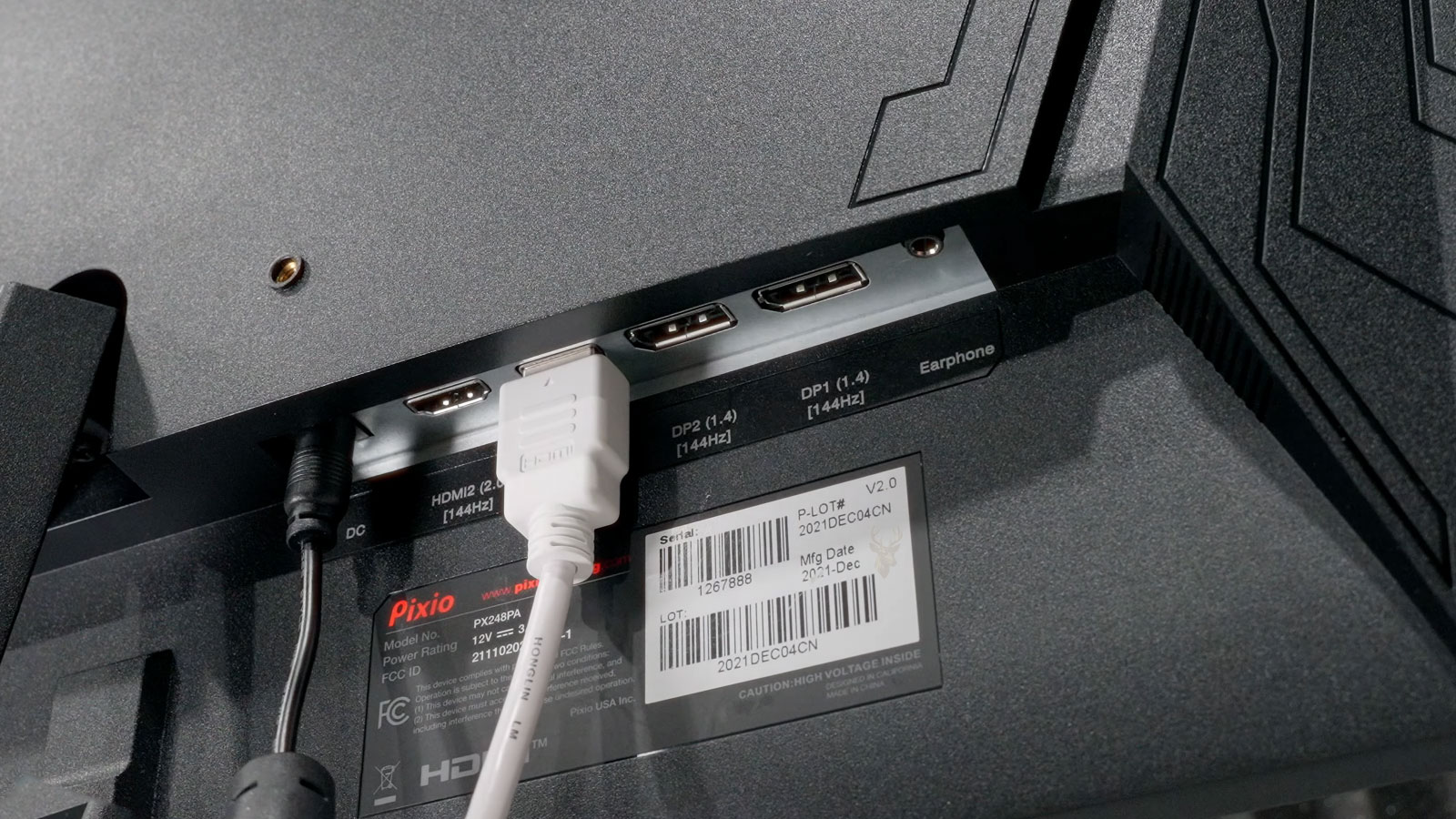
Adapters add another layer. HDMI-to-DisplayPort converters, USB video adapters, and docking stations may translate or recreate monitor information before passing it to Windows. If the adapter identifies the display differently after reconnection, the operating system can treat it as a new device even though the same monitor is still on the desk.
This is especially important when two identical monitors are used. Swapping their cables at the dock may exchange the connection paths and cause Windows to assign the saved location of one screen to the other.
A practical test is to keep the monitors connected to the same physical ports for several days. If the layout remains stable, frequent port changes may have been contributing to the rearrangement. If the problem continues without any cable movement, the next step is to look at detection timing, drivers, or docking behavior.
A stable picture does not always mean the display connection is stable enough to preserve the desktop arrangement.
A monitor can recover from a brief interruption so quickly that the user sees only a flicker, while Windows records the event as a removal and reconnection.
The Difference Between a Windows Problem and a Hardware Detection Problem
If the arrangement changes once and remains correct after being rebuilt, the issue may have been temporary. A driver update, dock reconnection, or monitor replacement may have caused Windows to create a new layout only once.
If the layout changes repeatedly, the investigation should move beyond the display settings screen. The operating system cannot preserve a reliable arrangement when the hardware environment appears different every time it starts.
| Observed Pattern | What It Suggests |
|---|---|
| The layout changed once after replacing a monitor | Windows may have created a new configuration for the new display. |
| The same monitor disappears and returns during use | A cable, adapter, dock, port, or power issue may be interrupting detection. |
| The arrangement changes after every graphics update | The driver may be resetting stored display information. |
| The problem occurs only after sleep | One display or dock may not wake at the same time as the others. |
| The layout is stable when connected directly but not through a dock | The docking station or its software becomes the stronger suspect. |
This comparison is useful because the visible symptom is nearly identical in every case. The monitors appear in the wrong order, but the reason can range from a one-time configuration change to an intermittent hardware path.
Application Windows and Desktop Icons May Behave Differently
Even after the monitor rectangles are restored, not every part of the desktop returns to its former position. Application windows may reopen on the correct screen while desktop icons remain grouped elsewhere. In another case, the icons may stay in place while several programs open on a secondary monitor.
This happens because different elements store their positions in different ways. Windows manages the general monitor arrangement, but applications may remember their own coordinates. Desktop icons also depend on available resolution, scaling, and the size of the primary display.
If the primary monitor changes from a large display to a smaller one, there may no longer be enough space to preserve every icon in the same location. Windows may compress or reorder them to fit the available desktop area.
The same principle applies to application windows. A program last closed near the edge of a high-resolution monitor may reopen partially outside a smaller screen after the layout changes. Correcting the display arrangement does not always repair every saved application position automatically.
For that reason, the desktop should be tested after the monitor layout is stable. Programs that still open in the wrong location can then be moved and closed normally so they save a valid position under the corrected arrangement.
A Stable Workspace Depends on Consistent Detection
Windows can remember multiple display layouts, but it can only reuse them when the monitors, ports, and connection paths appear consistent. Changing docks, swapping cables, delaying monitor power, or introducing unstable adapters can cause the same physical workspace to look like a new configuration.
The immediate correction is to identify the screens, rebuild the virtual arrangement, and confirm the intended primary display. The lasting correction depends on whether the monitors continue to be detected in the same order and through the same path.
When the layout remains stable after restart, the problem was likely limited to a changed configuration. When it continues to rearrange, the more useful question is not why Windows forgot the positions, but why the computer keeps presenting the monitors to Windows differently.