A Different Approach to Designing Computer Processors
Every processor requires a defined set of instructions that tells it how to perform calculations, move information, compare values, access memory, and respond to software. These instructions form an essential connection between the physical processor and the programs that run on it.
Most computer users never see this layer of technology. Applications communicate with the operating system, the operating system works with drivers and system software, and those components eventually issue instructions that the processor understands. Behind everything visible on the screen is a carefully defined language controlling how the hardware operates.
RISC-V, pronounced “risk-five,” represents a different approach to defining that processor language. Instead of belonging exclusively to one processor manufacturer, RISC-V is an open instruction set architecture that can be studied and implemented by many different organizations.
A Processor Needs More Than Electronic Circuits
A processor contains billions of electronic components, but those components require an organized system for interpreting commands. The instruction set architecture provides that organization.
An instruction set architecture, commonly shortened to ISA, defines the operations a processor can recognize. It establishes how instructions are represented, which registers are available, how information is handled, and how software communicates with the processor.
The instruction set architecture acts as an agreement between processor hardware and the software designed to run on it.
Two processors can have very different internal designs while supporting the same instruction set. When they follow the same architectural rules, compatible software can operate on both processors without needing to understand every detail of their physical construction.
The Instruction Set Sits Between Software and Hardware
Computer programs are commonly written in programming languages that are easier for people to understand than raw processor instructions. Compilers, interpreters, operating systems, and other development tools translate those programs into operations that the processor can execute.
| Technology Layer | Primary Role |
|---|---|
| Application | Provides the functions used by the person operating the computer. |
| Operating system | Manages software, memory, storage, devices, and system resources. |
| Compiler or interpreter | Translates programming instructions into operations the system can process. |
| Instruction set architecture | Defines the commands and processor behavior expected by software. |
| Processor hardware | Physically performs the requested operations. |
The ISA does not describe every transistor or internal circuit. Instead, it defines the behavior that software can expect when it sends an instruction to a compatible processor.
RISC-V Uses Reduced Instruction Set Principles
The letters RISC stand for Reduced Instruction Set Computer. This design philosophy generally favors a collection of relatively straightforward instructions that can be combined to perform more complicated work.
The word “reduced” does not mean that a RISC processor is incomplete or incapable. It refers to the way its instruction system is organized. Complex applications can still run because software combines many individual processor operations to accomplish larger tasks.
- Instructions are designed around clearly defined operations.
- Software combines basic commands to perform complicated tasks.
- Regular instruction formats can simplify parts of processor design.
- Optional capabilities can be added through standardized extensions.
- Different processors can implement the same architectural rules in different ways.
RISC-V is the fifth major RISC design created through the research project from which it originated, accounting for the Roman numeral V in its name.
An Open Standard Does Not Mean One Universal Processor
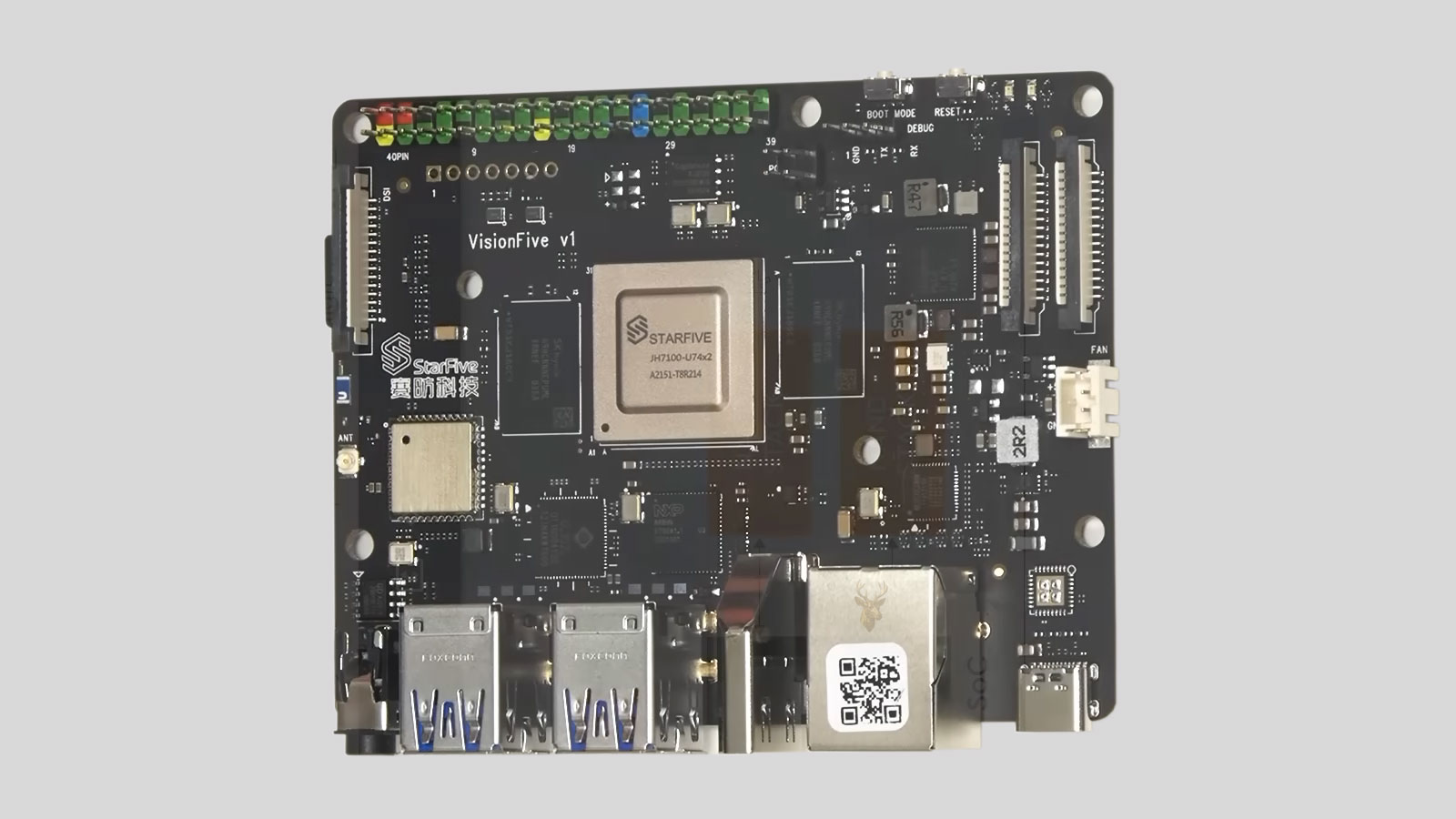
RISC-V is sometimes described as though it were a specific processor model. It is more accurate to describe it as an architectural standard from which processors can be designed.
Different organizations can produce RISC-V processors for very different purposes. One design may prioritize extremely low electrical consumption, while another may focus on higher performance, specialized calculations, embedded control, or educational experimentation.
| RISC-V Refers To | RISC-V Does Not Automatically Define |
|---|---|
| A processor instruction set architecture | The physical size of a finished processor |
| Standardized processor behavior | The manufacturing process used to build the chip |
| A foundation for compatible processor designs | The number of processor cores in every implementation |
| Required instructions and optional extensions | The performance of every RISC-V device |
| A documented interface for software | The quality of a particular commercial product |
Supporting the same instruction set does not make every processor identical. Clock speed, cache design, core count, power consumption, memory controllers, manufacturing quality, and many other decisions still influence the finished product.
The Base Architecture Can Be Expanded Through Extensions
One of the important characteristics of RISC-V is its modular structure. A basic implementation can support the instructions required for a relatively simple processor, while additional standardized extensions can introduce more capabilities.
This modularity allows a designer to avoid including every possible feature in equipment that does not need it. A small controller inside an appliance may require a different collection of capabilities from a processor intended for a workstation or server.
- Integer operations support basic calculations and data handling.
- Multiplication and division capabilities can be included where required.
- Floating-point support assists with calculations involving fractional values.
- Atomic instructions help coordinate work between multiple processing components.
- Compressed instructions can reduce the amount of memory occupied by certain code.
Extensions must still follow defined rules if software compatibility is expected. The ability to customize a processor does not eliminate the need for clear standards.
Processor Design and Processor Manufacturing Are Separate Tasks
Defining an instruction set is only one part of creating a working processor. Engineers must still design the internal architecture, verify its behavior, prepare the physical chip layout, select a manufacturing process, and test the finished hardware.
An open instruction set therefore does not make processor development simple or inexpensive. It removes one type of barrier by making the architectural specification available, but the engineering required to create reliable hardware remains substantial.
Access to an open processor specification provides a starting point, not a finished chip ready for installation.
Organizations Can Build Different Designs Around the Same Standard
A processor manufacturer may create its own internal design while remaining compatible with the RISC-V instruction set. Another organization can develop a completely different processor that follows the same visible architectural rules.
This is similar to how different manufacturers can build network equipment that communicates through the same standardized protocol. The products do not need to use identical internal components, but they must follow agreed behavior when interacting with compatible systems.
| Design Decision | Possible Variation |
|---|---|
| Core configuration | A processor may use one core or many cores. |
| Performance target | The design may prioritize speed, efficiency, or balanced operation. |
| Cache arrangement | Different amounts and levels of cache memory may be included. |
| Specialized functions | Additional hardware may accelerate selected workloads. |
| Intended device | The processor may serve embedded equipment, computers, or industrial systems. |
Open Specifications Can Support Education and Research
Processor architecture can be difficult to study when important technical details are unavailable or restricted. An openly documented instruction set gives students and researchers an opportunity to examine how software and processor hardware interact.
Educational institutions can use RISC-V to demonstrate instruction decoding, register behavior, memory access, compiler design, operating system development, and digital logic without creating an entirely new instruction system for every project.
- A program is written in a high-level programming language.
- Development tools translate the program for the selected RISC-V configuration.
- The resulting instructions are loaded into memory.
- The processor retrieves and decodes each instruction.
- Internal circuits perform the required operation.
- The result is returned to memory, a register, or another system component.
This process is not unique to RISC-V, but an accessible specification can make each stage easier to examine and understand.
Custom Hardware Can Be Designed for a Specific Purpose
General-purpose processors must support a wide range of software. Specialized equipment may have much narrower requirements. A device that reads sensors, manages a motor, processes a network signal, or controls industrial equipment may benefit from a processor designed around its particular workload.
RISC-V allows designers to begin with a standardized architecture and then select appropriate extensions or incorporate specialized supporting hardware. This can help create processors intended for specific environments without abandoning a common software foundation.
| Possible Environment | Typical Design Priority |
|---|---|
| Small embedded controller | Low cost and minimal electrical consumption |
| Battery-powered device | Energy efficiency and reduced heat generation |
| Industrial equipment | Predictable operation and long-term reliability |
| Research platform | Flexibility and access to architectural details |
| High-performance system | Processing capacity and efficient parallel work |
Software Compatibility Still Requires Careful Planning
A processor cannot become useful merely by supporting a well-defined instruction set. It also needs software. Operating systems, compilers, firmware, drivers, development tools, and applications must support the hardware configuration.
Software compiled for one processor architecture does not normally run directly on an incompatible architecture. A program built for an x86 computer, for example, cannot be assumed to operate unchanged on a RISC-V processor. It may need to be recompiled, adapted, or supported through another compatibility method.
- The operating system must recognize the processor platform.
- A compatible compiler must generate the correct instructions.
- Drivers must support the surrounding hardware.
- Applications may require testing and modification.
- Firmware must initialize the system correctly.
For this reason, a strong software ecosystem is just as important as the processor architecture itself.
Thirty-Two-Bit and Sixty-Four-Bit Designs Serve Different Needs
RISC-V can be implemented using different register widths. A 32-bit design may be appropriate for smaller embedded devices, while a 64-bit implementation can address the requirements of more capable computing systems.
The bit width influences how the processor handles values, addresses memory, and supports software. It does not, by itself, determine the complete performance of the device. A processor’s real-world behavior also depends on its internal design, clock frequency, memory system, software, and intended workload.
The name of an instruction set identifies an architectural foundation, not the complete capabilities of every processor built from it.
An Open Architecture Can Still Appear in Commercial Products
Open standards and commercial products are not opposites. A company can design and sell a processor based on an open instruction set while keeping parts of its own internal implementation private.
The standardized instruction set defines how compatible software interacts with the processor. It does not necessarily require every circuit, optimization, manufacturing detail, or supporting component to be publicly disclosed.
| May Be Standardized or Publicly Documented | May Remain Specific to the Manufacturer |
|---|---|
| Supported processor instructions | Internal execution design |
| Register behavior | Performance optimizations |
| Required architectural behavior | Physical chip layout |
| Standard extensions | Manufacturing arrangements |
| Software-visible compatibility rules | Commercial product strategy |
This distinction allows organizations to cooperate around a shared architectural standard while continuing to compete through processor implementation, efficiency, performance, support, and product design.
RISC-V Does Not Automatically Replace Existing Architectures
Established processor architectures benefit from mature software, extensive development tools, experienced engineering teams, existing applications, and large collections of compatible hardware. Those advantages cannot be replaced simply by introducing another instruction set.
RISC-V provides an additional architectural choice rather than guaranteeing that every computer will move to the same design. Different instruction sets can continue serving different markets, devices, and performance requirements.
- Existing software may already depend on another architecture.
- Organizations may have years of experience with established platforms.
- Changing architectures can require new tools and development work.
- Hardware support must be built around each complete system.
- Performance depends on implementation rather than openness alone.
Emulation Is Different From Native Execution
Software written for another instruction set can sometimes operate through emulation or translation. In that situation, an additional software layer interprets or converts instructions so they can be processed by the available hardware.
This can improve compatibility, but it is not identical to running a program that was compiled directly for the processor. Translation may require additional processing, and certain hardware-dependent features may not function exactly as they do on the original platform.
| Execution Method | How the Software Runs |
|---|---|
| Native execution | The program contains instructions created directly for the processor architecture. |
| Recompiled software | The source code is translated again for the new architecture. |
| Emulation | Software imitates another hardware or processor environment. |
| Binary translation | Instructions are converted from one architecture into another form. |
| Virtualization | A software-managed environment shares underlying hardware resources. |
Processor Architecture Is Only One Part of a Complete Computer
A working computer includes much more than its central processor. Memory controllers, storage interfaces, graphics hardware, security components, input and output connections, firmware, and power-management systems must operate together.
Two computers using processors from the same architectural family may provide very different experiences because the surrounding components and software are different. Likewise, a capable processor cannot compensate for inadequate memory, slow storage, poor cooling, or unsupported devices.
- The processor executes supported instructions.
- Memory supplies active program information.
- Storage preserves applications and files.
- Firmware prepares the hardware for startup.
- The operating system manages system resources.
- Drivers allow the operating system to communicate with connected components.
- Applications provide the functions required by the user.
Why an Instruction Set Can Influence Technology for Decades
Once an instruction set gains substantial software support, changing it becomes difficult. Operating systems, development tools, applications, technical knowledge, and hardware investments accumulate around the architecture.
Compatibility is therefore one of the most important considerations in processor technology. New processors often continue supporting instructions developed years earlier because users and organizations depend on existing software.
RISC-V approaches this long-term challenge by defining a stable base architecture while providing organized methods for adding capabilities. Maintaining consistency is essential because software developers must know which instructions and behaviors they can expect from compatible hardware.
A Shared Foundation for Different Processor Designs
RISC-V demonstrates that the language connecting software and processor hardware can be developed as an open standard. It gives researchers, educational institutions, manufacturers, and technology developers a common architectural foundation from which different processors can be created.
Its open nature does not guarantee faster processors, easier manufacturing, immediate software compatibility, or success in every type of computer. Those results still depend on engineering quality, development tools, operating-system support, hardware integration, and the strength of the surrounding software ecosystem.
The importance of RISC-V is found in the choice it provides. Instead of requiring every processor project to begin with a privately controlled instruction set or invent a completely new architecture, designers can work from a documented standard and adapt their implementations to different computing needs.
For computer users, RISC-V offers a useful example of how deeply hidden architectural decisions influence everyday technology. Long before an application opens or information appears on a screen, the processor must understand the instructions it receives. The rules governing those instructions help shape which software can run, how hardware is designed, and how future computer systems may develop.