External Drives Should Be Ejected Before Disconnection
macOS may refuse to eject an external hard drive, SSD, flash drive, or memory card when files are still open or the system continues using the device. Disconnecting it without proper ejection can interrupt unfinished writes and damage the file system.
The warning does not automatically mean the drive is failing. In many cases, an application or background process simply has not released access to it.
Open Files Are a Common Cause
A document, photograph, video, spreadsheet, or project stored on the drive may still be open. The application can continue holding the file even when its window is minimized or hidden behind another program.
- Save and close files stored on the external drive.
- Close applications that recently accessed the device.
- Check for hidden application windows.
- Wait for active file transfers to finish.
- Attempt the ejection again.
Finder Windows Can Keep the Drive Active
A Finder window displaying a folder from the external drive can sometimes contribute to an ejection delay. Preview panes, Quick Look, and folder calculations may continue reading information from the device.
Closing Finder windows associated with the drive and selecting another location before ejecting can help release it.
File Transfers May Continue After the Progress Bar Disappears
macOS can temporarily store data in memory before finishing the write to the external device. A transfer may appear complete while the drive remains active for a short period.
Activity lights, drive sounds, and continuing system activity should be allowed to settle before removal.
| Observed Behavior | Possible Explanation |
|---|---|
| Ejection works after closing one application | The application was still using a file on the drive. |
| Drive remains active after copying files | macOS may still be completing cached writes. |
| Finder becomes slow while ejecting | The system may be reading folders, previews, or metadata. |
| Every external drive refuses to eject | A system process or software conflict may be involved. |
Photos and Media Applications Can Maintain Background Access
Photos, Music, video editors, backup programs, and media libraries may scan an external drive after it is connected. These applications can continue accessing folders even when no file appears open.
Closing the application completely is more effective than closing only the visible document or library window.
Spotlight Indexing Can Delay Ejection
Spotlight may index the contents of a newly connected drive so files can be found through search. During indexing, macOS reads filenames, metadata, and document contents in the background.
A large drive or one containing many small files can remain active for an extended period while indexing continues.
A drive that appears idle may still be in use by search, backup, synchronization, or media services.
Backup Software Can Prevent Removal
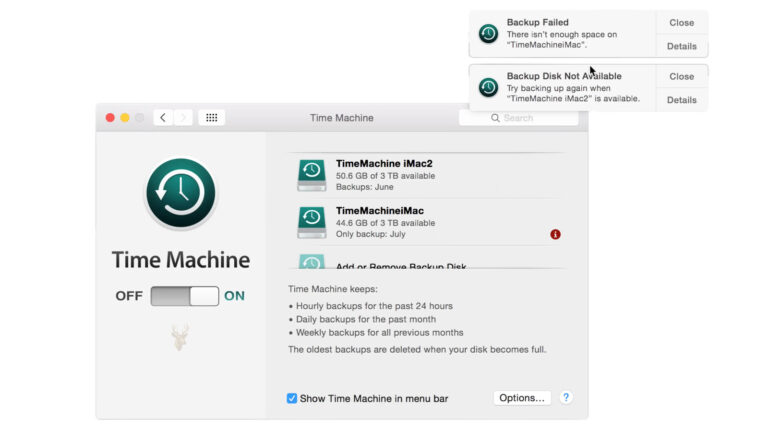
Time Machine and third-party backup applications may begin working automatically when a designated drive is connected. The device should not be disconnected while a backup is preparing, copying files, or verifying data.
The backup status should be checked before attempting to eject the drive again.
Cloud Synchronization Can Use External Folders
Cloud-storage applications may monitor folders located on an external device. Uploading, downloading, or comparing files can keep the drive busy even when the user is not actively opening anything.
Pausing synchronization or closing the cloud application can help determine whether it is preventing safe removal.
Terminal Sessions Can Hold a Folder Open
A Terminal window whose current directory is located on the external drive can prevent ejection. Scripts and command-line utilities may also continue reading or writing files in the background.
Changing the Terminal location to the internal drive or closing the session may release the device.
Disk Utility Can Show Whether the Volume Is Mounted
Disk Utility displays the physical drive and its individual volumes. A device may contain more than one mounted volume, and all of them must be released before the hardware can be safely disconnected.
- Open Disk Utility.
- Choose the external volume in the sidebar.
- Confirm that no repair or erase operation is running.
- Attempt to unmount the volume.
- Eject the physical device after every volume is released.
Multiple Partitions Can Make Ejection Confusing
One external drive can contain several partitions that appear separately in Finder. Ejecting only one volume may leave another mounted and active.
Selecting the physical device rather than a single partition helps ensure that the entire drive is prepared for removal.
Restarting the Mac Can Release a Stuck Process
If applications are closed but the drive remains in use, restarting the Mac can stop the process holding it. The drive should remain connected during the restart and be ejected after macOS finishes loading.
Repeated forced removal should be avoided because it can turn a temporary software problem into file-system damage.
Force Eject Should Be Used Carefully
macOS may offer a force-eject option when normal removal fails. This can disconnect the volume even if a process still has files open, so it should not be the first step.
Force eject is safer only after file transfers have stopped, applications are closed, and the drive shows no signs of active writing.
Activity Monitor Can Help Identify the Process
Activity Monitor can reveal applications using significant disk activity. A backup utility, media application, cloud service, or file-management process may continue working after its visible window is closed.
Quitting the correct application is preferable to forcing unrelated system processes to stop.
Quick Look Can Continue Reading a File
Previewing a document, image, or video with Quick Look may keep the file active temporarily. Closing the preview and selecting a file located on the internal drive can help release access.
Antivirus and Security Software May Scan the Drive
Security programs often inspect newly connected storage automatically. A large drive can remain in use while the software checks files for threats or unusual behavior.
| Background Process | Possible Effect |
|---|---|
| Spotlight indexing | Continues reading filenames and document metadata. |
| Backup software | Writes new data or verifies previous backups. |
| Security scanning | Inspects files before releasing the device. |
| Cloud synchronization | Uploads, downloads, or compares stored files. |
Network Sharing Can Keep an External Drive Busy
An external drive shared with other computers on the network may remain active while another device has a folder or file open. Local applications can appear closed even though a remote connection is still using the volume.
File sharing should be checked before the drive is forced offline.
Virtual Machines May Be Using Files on the Drive
Virtual machine software may store disk images, snapshots, or shared folders on external storage. Suspending the virtual machine may not fully release those files.
The virtual machine application should be shut down completely before the external drive is ejected.
Encrypted Volumes May Take Longer to Unmount
Encrypted storage can require additional time to close files, update metadata, and release the mounted volume. Disconnecting too quickly after an encryption-related task increases the risk of corruption.
An ejection delay is often a sign that macOS is still protecting an unfinished storage operation.
File System Errors Can Interfere With Ejection
A damaged file system may leave the drive in an unstable state. Finder can freeze, folders may open slowly, and the volume may refuse to unmount normally.
Disk Utility First Aid can check the volume, but important files should be copied elsewhere before repair when the drive is behaving unpredictably.
USB Hubs Can Create Unstable Connections
A weak hub, dock, or adapter can cause brief connection interruptions while the drive remains mounted. macOS may then struggle to complete an ejection request cleanly.
- Connect the drive directly to the Mac when possible.
- Use a known-good cable and adapter.
- Avoid disconnecting other devices during testing.
- Check whether the problem follows the hub or dock.
Drives With External Power Need Time to Finish
Desktop external drives often use their own power adapters and may continue spinning after the volume disappears from Finder. The drive should not be unplugged until macOS confirms ejection and activity has stopped.
Sleep Mode Can Interrupt Proper Removal
If the Mac enters sleep while files are being copied, the external drive may reconnect or remain in an uncertain mounted state after wake-up. Completing the transfer and ejecting the device before sleep reduces this risk.
Repeated Ejection Failures Need Further Diagnosis
If the same drive refuses to eject on multiple Macs, the storage device or its file system may be responsible. If every drive behaves the same way on one Mac, the cause is more likely related to software, ports, adapters, or system processes.
| Test Result | Likely Direction |
|---|---|
| Only one drive refuses to eject | Inspect that drive, enclosure, cable, and file system. |
| All drives refuse to eject | Check macOS, background software, and connected accessories. |
| Problem occurs only through a hub | Test the hub, dock, power supply, or adapter. |
| Problem stops after restarting | A temporary process was probably holding the volume open. |
A Second Mac Can Help Separate Drive and System Problems
Testing the external device on another compatible Mac can show whether the failure follows the drive. The test should use a different cable and a direct connection whenever possible.
A Proper Ejection Test Should Be Repeated
After closing applications, stopping background activity, or correcting a file-system problem, the drive should be connected and ejected again. A successful repair should allow the volume to unmount without long delays or repeated warnings.
The Drive Should Be Tested After a Restart
A restart clears temporary processes and reloads storage services. If the drive ejects normally after restarting but the problem later returns, a background application may be reopening files automatically.
- Restart the Mac with the drive disconnected.
- Reconnect the drive directly to the computer.
- Open and close one test file.
- Wait for disk activity to stop.
- Attempt a normal ejection from Finder.
Repeated Warnings Can Point to One Application
If ejection fails only after using a particular program, that application may not be releasing files correctly. Updating, reinstalling, or changing its storage settings may prevent the problem from returning.
Cable and Port Testing Should Not Be Skipped
An unstable cable or port can interrupt communication while macOS is trying to unmount the volume. Testing another cable and another compatible port helps separate a connection problem from a software problem.
| Final Test | What It Can Confirm |
|---|---|
| Drive ejects normally on another Mac | The original Mac may have a software or connection issue. |
| Drive fails on multiple Macs | The drive, enclosure, or file system may need attention. |
| Problem occurs only with one cable | The cable may be unstable or damaged. |
| Problem disappears after closing one program | That program was probably holding the volume open. |
First Aid Results Should Be Reviewed Carefully
Disk Utility may report that the volume appears normal, that repairs were completed, or that the file system could not be repaired. A failed repair result is a warning to protect important data before continuing to use the device.
A drive that repeatedly develops errors should not be trusted as the only location for important files.
Forced Removal Can Create New Problems
Disconnecting a drive while data is still being written can leave files incomplete, damage folder structures, or prevent the volume from mounting later. The effects may not become visible until the drive is reconnected.
A drive that refuses to eject should be treated as active until macOS confirms that it is safe to disconnect.
Important Files Should Be Backed Up Before Repair
If the drive is slow, disconnects unexpectedly, or reports file-system errors, valuable files should be copied to another storage device before repair attempts. Continued testing can increase the risk when the hardware is already unstable.
Replacement May Be Necessary for an Unstable Enclosure
The storage device may be healthy while the external enclosure, adapter board, or connector is failing. Moving the drive to a compatible enclosure can sometimes restore stable mounting and ejection.
This type of work should be performed carefully, especially when the drive contains important information or uses a proprietary enclosure.
Professional Service Is Appropriate When the Drive Freezes the Mac
Inspection is recommended when Finder stops responding, Disk Utility cannot complete a test, the drive disconnects during transfers, or the Mac becomes unusually slow whenever the device is connected.
- The drive makes unusual clicking or repeated spin-up sounds.
- Files disappear or open with errors.
- The volume mounts only occasionally.
- Disk Utility reports that repairs cannot be completed.
- The drive contains data that is not stored elsewhere.
Safe Removal Depends on Stable Communication
A Mac that refuses to eject an external drive is usually responding to an open file, unfinished write, background service, file-system problem, or unstable connection. Identifying what is still using the volume is safer than repeatedly forcing it offline.
Once the underlying cause is corrected, the drive should mount normally, transfer files without interruption, and eject cleanly before it is physically disconnected.