
A Restart During USB Connection Is Not Normal
Connecting a mouse, flash drive, printer, phone, or external storage device should not cause a computer to restart. When the system immediately shuts down and starts again, the USB connection may be creating an electrical, power, hardware, or software problem.
The timing of the restart is important. A computer that restarts the moment a plug enters the port should be approached differently from one that restarts several minutes after a device begins operating.
The Device Should Be Disconnected Before More Testing
A damaged accessory or cable can short the USB power connection and repeatedly force the computer to protect itself. Continuing to reconnect the same equipment may damage the port, motherboard, or power supply.
- Disconnect the device that triggered the restart.
- Inspect its plug and cable for visible damage.
- Do not reconnect equipment that smells burned or becomes hot.
- Check the USB port for bent contacts or broken plastic.
- Back up important files before extensive testing.
Testing Another Computer Can Identify a Defective Accessory
If the same USB device causes problems on another computer, the accessory or its cable becomes the likely source. A damaged flash drive, external enclosure, printer cable, or phone connector can create an unstable electrical connection.
Valuable computers should not be used for this comparison when the device shows visible damage. Professional electrical testing may be safer than connecting a suspected short circuit to another system.
| Test Result | Likely Direction |
|---|---|
| One device restarts several computers | The device or cable may be defective. |
| Several devices restart one computer | The computer’s port, power system, or motherboard may be involved. |
| Only one USB port causes the restart | That port may contain physical or electrical damage. |
| The restart occurs only with high-power devices | USB power delivery or the computer power supply may be weak. |
Bent USB Contacts Can Create a Short Circuit
The contacts inside a USB port must remain separated. If a contact bends against another pin or touches the metal shell, inserting a plug can create a short circuit.
The computer may shut down instantly to prevent further damage. A visibly damaged port should remain unused until it has been inspected and repaired.
An immediate restart at the moment of connection strongly suggests that the USB port, plug, or power circuit should be inspected first.
Front USB Ports Can Have Damaged Internal Cables
Desktop front-panel USB ports connect to the motherboard through internal cables and headers. A pinched cable, reversed connector, damaged header, or loose wire can cause a restart when a device is inserted.
If the rear motherboard ports work normally while the front ports trigger shutdowns, the front-panel assembly and its internal connection should be examined.
High-Power USB Devices Can Expose a Weak Power System
External hard drives, optical drives, phones, and some wireless adapters require more power than a basic mouse or keyboard. A weak power supply or damaged USB power circuit may fail when the additional load is connected.
The computer may appear stable during light use but restart when the device begins spinning, charging, or transferring data.
| Connected Equipment | Typical Power Demand |
|---|---|
| Basic mouse or keyboard | Usually low. |
| USB flash drive | Low to moderate. |
| Portable external hard drive | Higher during startup and activity. |
| Phone or tablet | Can increase when charging begins. |
A Powered USB Hub Can Help Separate Power From Data
A powered hub supplies part of the electrical demand from its own adapter. If a device works through a quality powered hub but restarts the computer when connected directly, the computer’s USB power delivery may be involved.
This is only a diagnostic clue. A hub should not be used to bypass a port with bent contacts, heat, corrosion, or visible damage.
Liquid Damage Can Affect USB Protection Circuits
Liquid entering a USB port can corrode contacts and nearby motherboard components. The port may continue working temporarily before beginning to cause restarts, disconnections, or complete shutdowns.
Residue should be cleaned from the circuit board rather than only from the visible opening. Corrosion can continue beneath the connector where it cannot be seen externally.
A Blue Screen Can Look Like an Ordinary Restart
Windows may encounter a driver or hardware error and restart automatically before the blue screen can be read. The event may appear to be an instant power failure even though the operating system recorded an error.
- Note whether the computer loses power instantly or displays an error.
- Check whether Windows reports that it recovered from an unexpected shutdown.
- Review the time of the restart in Event Viewer.
- Test the device with another cable when appropriate.
- Compare the result in another known-good USB port.
USB Drivers Can Fail When a Device Is Detected
A damaged or incompatible USB, chipset, storage, or device driver can cause Windows to crash when new hardware is connected. This is more likely when the restart occurs after Windows begins identifying the device rather than at the exact moment of insertion.
Driver problems should be investigated only after obvious cable, connector, and electrical damage have been ruled out.
The Timing of the Failure Helps Narrow the Cause
| When the Restart Occurs | Possible Cause |
|---|---|
| As the plug touches the port | Short circuit, bent contact, or damaged connector. |
| When the device powers on | Excessive current demand or weak power delivery. |
| When Windows identifies the device | Driver, controller, or operating-system failure. |
| During a file transfer | Unstable device, cable, storage enclosure, or system power. |
Important Storage Devices Require Extra Caution
An unexpected restart during a file transfer can corrupt data on an external drive or flash drive. Repeated connection attempts may also worsen a failing enclosure or storage device.
If the USB device contains important files, diagnosis should focus on protecting the data before performing stress tests or repeated power cycles.
A USB-related restart can threaten both the computer and the information stored on the connected device.
Rear and Front Ports Should Be Compared
Desktop computers often use different hardware paths for front and rear USB ports. Rear ports are usually mounted directly on the motherboard, while front ports depend on internal cables and case-mounted connectors.
If only the front ports trigger restarts, the internal header, cable, or front-panel assembly should be inspected before the motherboard is blamed.
Laptop USB Ports May Share the Same Power Rail
Several laptop USB ports can share one protection circuit or daughterboard. A fault in one connector may affect another port on the same side of the computer.
Testing each port separately can reveal whether the problem is isolated or part of a larger USB power failure.
USB-C Connections Require Additional Care
USB-C ports can carry data, charging power, video, and accessory power through the same connector. Damage or contamination inside the port can therefore create more complex symptoms than a traditional USB port.
- Inspect the USB-C port for debris or bent internal contacts.
- Use only known-good cables with the correct power rating.
- Avoid testing unknown chargers or adapters.
- Disconnect the device if the port becomes hot.
- Do not force a loose or damaged plug into the connector.
Charging Cables Can Cause Restarts Without Transferring Data
A phone or tablet cable may place a power load on the USB port even when no files are being transferred. A damaged charging cable can short internally and cause the computer to restart as soon as charging begins.
Testing another certified cable can help separate the mobile device from the cable itself.
Externally Powered Devices Can Still Cause Problems
Printers, scanners, and large external drives may use their own power adapters, but they still connect electrically to the computer through USB. A grounding problem or defective interface board can send unstable voltage through the data connection.
| Device Type | Possible Failure Source |
|---|---|
| USB-powered hard drive | High startup current, cable damage, or enclosure failure. |
| Powered printer | USB interface, grounding, or damaged cable. |
| Phone or tablet | Charging cable, connector damage, or power negotiation. |
| USB hub | Faulty adapter, overloaded ports, or internal short. |
A Damaged USB Hub Can Affect Every Connected Device
An unpowered or poorly designed hub can overload a computer port. A defective powered hub may also send unstable power toward the computer if its internal protection fails.
The hub should be removed from testing when the computer operates normally with devices connected directly.
Motherboard Protection Components Can Fail
USB circuits often include fuses, current-limiting components, and protection devices. These parts are designed to reduce damage from shorts and static discharge.
A weakened protection component may shut the system down under normal load or fail to isolate a damaged port. Board-level diagnosis may be required when every external cause has been eliminated.
A port can look physically normal while the protection circuit behind it has already been damaged.
Power Supply Problems Can Appear Only During Added Load
A desktop power supply can seem stable until a USB device adds a small electrical demand. If the power supply is already weak, the extra load may cause its voltage to drop and restart the system.
Other signs may include restarts during gaming, storage activity, or when additional drives are connected.
Laptop Adapters and Batteries Can Influence the Result
A laptop with a weak power adapter or failing battery may restart when a USB device begins drawing power. Comparing behavior on adapter power and battery power can provide useful diagnostic information.
This test should not be performed when the USB port or device shows signs of a short circuit.
Event Logs Can Separate a Crash From Power Loss
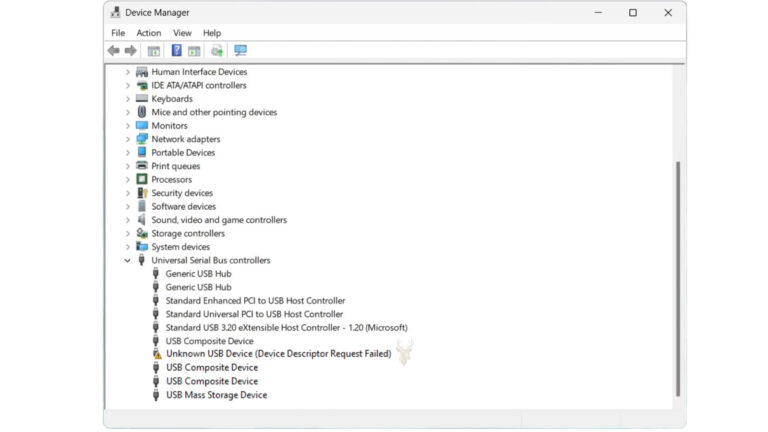
Windows Event Viewer may record a driver error, bug check, or unexpected shutdown. A recorded blue-screen code points toward a software or controller failure, while an abrupt loss of power may leave only a general shutdown event.
- Record the exact time of the restart.
- Open Event Viewer after Windows starts again.
- Review critical and error events from that time.
- Look for driver, USB, storage, or bug-check entries.
- Compare several incidents for a repeating pattern.
Automatic Restart Can Hide a Stop Error
Windows can restart automatically after a serious error. Disabling automatic restart temporarily may allow the stop code to remain visible long enough to record it.
This should be used only for diagnosis. The error code should be interpreted together with the connected device and the timing of the failure.
Safe Mode Can Help Identify Driver Involvement
Safe Mode loads a limited set of drivers. If the computer accepts the USB device in Safe Mode but restarts during a normal startup, a third-party driver or background program may be involved.
If the restart still happens instantly in Safe Mode, hardware or electrical causes remain more likely.
| Test Environment | Interpretation |
|---|---|
| Restart occurs before Windows loads | Hardware, port, cable, or power should be checked first. |
| Restart occurs only in normal Windows | A driver or software conflict may be involved. |
| Restart occurs in Safe Mode | A low-level driver or hardware fault remains possible. |
| No restart from a bootable diagnostic tool | The installed operating system may be contributing. |
Chipset Drivers Affect USB Controller Operation
USB controllers are managed through the motherboard chipset. Missing or damaged chipset drivers can cause unstable device detection, especially after a Windows installation or major update.
The correct drivers should be obtained for the exact computer or motherboard model rather than from an unrelated system.
Storage Drivers May Fail During Device Access
An external drive may connect normally but restart the computer when Windows begins reading its partition or file system. The failure could involve the enclosure, storage device, USB controller, or storage driver.
Important drives should not be repeatedly opened when every access attempt causes a crash.
Overcurrent Warnings Should Not Be Ignored
Some computers display a USB overcurrent warning and shut down before Windows starts. This message indicates that the motherboard detects excessive current on a USB circuit.
All external USB devices should be disconnected. If the warning remains, the internal front-panel cable, damaged port, or motherboard circuit should be inspected.
An overcurrent warning is a protective shutdown, not a software notification that should be bypassed.
Internal USB Devices Can Also Be Responsible
Webcams, card readers, Bluetooth modules, lighting controllers, and liquid coolers may connect to internal USB headers. A failed internal device can create the same type of restart as an external accessory.
When the problem continues with every external device removed, internal USB equipment should be included in the diagnosis.
Testing Should Proceed From the Safest Possibility
- Remove the device that first caused the restart.
- Inspect the port, plug, and cable before reconnecting anything.
- Compare another low-power device in a known-good port.
- Separate front, rear, and hub-connected ports.
- Review Windows errors only after electrical damage is ruled out.
- Stop testing if heat, odor, sparks, or repeated shutdowns appear.
A Stable Repair Should Be Verified With Several Devices
After the cause is corrected, the computer should be tested with more than one known-good USB device. A mouse can confirm basic detection, while a flash drive or external drive can test power and data activity.
The system should remain stable during connection, recognition, file access, and removal.
Each Port Should Be Tested Separately
One repaired port does not confirm that every USB connection is safe. Front, rear, side, and docking-station ports may use different cables, controllers, or power circuits.
- Connect a low-power device to each port.
- Confirm that Windows recognizes it normally.
- Check for movement, heat, or repeated connection sounds.
- Test one storage device in the known-good ports.
- Restart the computer and repeat the most important checks.
File Transfers Can Expose Remaining Instability
A USB port may appear normal until sustained activity begins. Copying a moderate test file to and from a known-good drive can reveal unstable power, controller errors, or intermittent connections.
The test should stop immediately if the computer freezes, restarts, or repeatedly disconnects the drive.
Unexpected Shutdown Records Should Be Reviewed Again
After repair, Event Viewer can confirm whether new critical shutdowns or USB controller errors continue to appear. A system that no longer restarts should not keep recording the same failure pattern.
| Final Test | Expected Result |
|---|---|
| Low-power USB device | Immediate detection without restart. |
| External storage transfer | Stable copying without errors or disconnects. |
| Multiple USB ports | Normal behavior from every usable connector. |
| Windows event review | No new recurring USB or shutdown errors. |
A Damaged Port May Need to Be Disabled Until Repair
If one port is physically damaged but the rest of the computer remains stable, that connector should be kept out of service. A cover or clear identification can help prevent accidental use.
Software disabling may reduce accidental access, but it does not remove an electrical short or repair bent contacts.
Front-Panel Assemblies Are Often Replaceable
On many desktop computers, damaged front USB ports can be corrected by replacing the front-panel board, cable, or complete connector assembly. This may be simpler than repairing the case-mounted ports individually.
The motherboard header should still be inspected because a damaged cable can also bend or burn the header pins.
Laptop Port Repair May Require Board-Level Work
A laptop USB port may be mounted on a replaceable daughterboard or soldered directly to the motherboard. The repair method depends on the internal design and the condition of the surrounding pads and traces.
Replacing the visible connector is not enough when the power rail or protection circuit behind it has also failed.
Power Supply Replacement Should Follow Proper Testing
A desktop power supply should not be replaced only because a USB device caused one restart. Voltage stability, system load, port condition, and device behavior should be compared first.
If the system also restarts during gaming, storage activity, or other added loads, the power supply becomes a stronger suspect.
Important Data Should Be Checked After Repeated Restarts
Unexpected shutdowns can damage open files, external-drive file systems, and unfinished transfers. Important folders should be reviewed after the computer becomes stable.
- Open recently transferred files and confirm that they are complete.
- Check external drives for file-system errors when appropriate.
- Back up important data to another verified location.
- Avoid reusing a device that repeatedly caused system crashes.
Prevention Begins With Careful USB Use
USB damage often begins with forced plugs, pulled cables, oversized accessories, or equipment left connected while a laptop is moved. Reducing mechanical strain can protect both the port and motherboard.
| Preventive Step | Benefit |
|---|---|
| Insert plugs straight | Reduces bent contacts and connector damage. |
| Use short extension cables | Limits strain from heavy USB devices. |
| Replace damaged cables promptly | Reduces shorts and unstable connections. |
| Disconnect devices before moving a laptop | Protects ports from impact and leverage. |
Professional Diagnosis Is Appropriate After Repeated Shutdowns
The computer should be inspected when several devices cause restarts, an overcurrent warning remains, a port becomes hot, or visible damage is present. Repeated power cycling can increase motherboard and storage damage.
A proper diagnosis may include checking the USB connector, internal cables, protection components, power supply, chipset operation, and Windows crash records.
USB-Triggered Restarts Require Both Hardware and Software Testing
A computer that restarts when a USB device is connected may be reacting to a short circuit, excessive power demand, damaged port, defective accessory, driver crash, or failing internal component.
Starting with physical inspection and safe comparison testing helps protect the computer while narrowing the cause. Once the repair is complete, stable detection and file transfer should occur without shutdowns or repeated errors.