
Power Settings Can Interrupt an Otherwise Healthy Connection
A computer can lose network access even when the router, modem, and internet service are operating normally. In some cases, the interruption begins inside the computer when Windows reduces power to the network adapter. The setting is intended to conserve energy, but it can also create delayed reconnections, brief dropouts, or a connection that does not return correctly after sleep.
This behavior can affect both wired Ethernet adapters and wireless network cards. The symptoms are not always dramatic. A browser may pause for several seconds, a shared folder may become unavailable, a remote session may disconnect, or an application may report that the network was lost and then recover without any action from the user.
Because the connection often returns, the problem may be blamed on the router or internet provider. Power management deserves consideration when the interruption affects only one computer, appears after periods of inactivity, or begins after the system wakes from sleep.
The Network Adapter Is an Active Device
A network adapter does more than provide a physical port or wireless connection. It continuously exchanges data with Windows, the network driver, the router, and other devices. Even when the computer appears idle, the adapter may still maintain link status, receive background traffic, renew network information, and listen for activity.
To reduce energy use, Windows can place certain hardware into lower-power states. This is especially useful on laptops, where battery life is important. The operating system may reduce activity when the device is not being used heavily, then attempt to restore full operation when network traffic resumes.
Most of the time, this process is invisible. Problems begin when the adapter, driver, firmware, or power plan does not handle the transition correctly. The device may take too long to wake, fail to reestablish the connection, or reconnect without restoring all network functions.
A network adapter can remain visible in Windows while still failing to communicate correctly after a power-state change.
Symptoms Can Look Like Several Different Problems
Network power issues do not produce one universal symptom. The result depends on the adapter model, connection type, driver, and activity taking place when the interruption occurs.
- A wired connection changes to no network access after the computer sits idle.
- Wi-Fi disappears briefly and then reconnects.
- A remote support session drops even though other devices remain online.
- Shared folders or network printers become unavailable after sleep.
- The adapter works again only after it is disabled and reenabled.
- A restart restores the connection temporarily.
- Online applications lose communication while local programs continue working.
These symptoms can also be caused by weak wireless signals, damaged Ethernet cables, router problems, driver faults, or security software. The timing of the failure often provides the most useful clue. A connection that fails immediately after startup suggests a different problem from one that stops only after inactivity or sleep.
Device Manager Contains a Direct Power Control
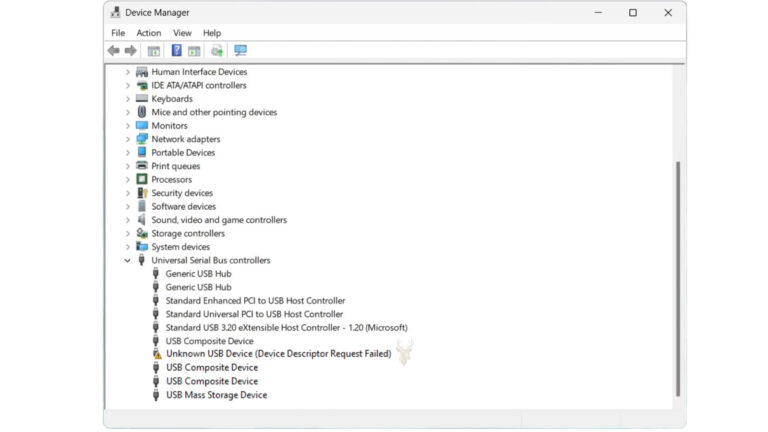
Many Windows network adapters include a power management setting inside Device Manager. The option commonly allows the computer to turn off the device to save power. When enabled, Windows is permitted to place the adapter into a reduced-power condition.
Disabling this option can improve stability on systems where the adapter does not wake reliably. It does not repair a defective card, and it does not guarantee that every disconnect will stop. It simply prevents Windows from using one specific method of reducing power to that device.
The setting may not appear on every computer. Some manufacturers manage adapter power through their own driver packages, firmware, or system utilities. Certain modern systems also use power controls that are not exposed through the traditional Device Manager interface.
Wireless and Ethernet Adapters May React Differently
Wireless adapters must maintain communication with an access point while also managing signal strength, roaming behavior, security, and radio power. A reduced-power mode can save battery energy, but it may also delay responses or make a weak connection less stable.
Ethernet adapters operate through a physical cable, but they also include energy-saving features. Some can reduce link activity when traffic is low or place portions of the hardware into a lower-power state. These features may be described with names such as Energy Efficient Ethernet, Green Ethernet, power saving mode, or reduced link speed.
The exact labels depend on the adapter manufacturer. Two computers running the same version of Windows may offer very different advanced settings because those controls are supplied by the network driver rather than Windows alone.
Sleep and Wake Transitions Expose Weaknesses
Sleep mode is a common time for network problems to appear. Before entering sleep, Windows reduces activity across many components. When the computer wakes, each device must return to an operational state and restore communication with the operating system.
A network adapter may appear to wake correctly while still holding incomplete connection information. The Wi-Fi icon can show a connection even though websites do not open. An Ethernet adapter may display an active link but fail to reach the router. In other cases, the adapter remains disabled until Windows retries the device or the user restarts the computer.
When failures consistently follow sleep, the investigation should include the network driver, power settings, laptop firmware, Windows power plan, and the behavior of the router during reconnection. Treating the event as a general internet outage can overlook the pattern occurring inside the computer.
A Power Setting Is Only One Part of the Connection
Changing the adapter power option is sometimes presented as a universal fix, but network reliability depends on several layers. The hardware must function correctly, the driver must communicate with Windows, the router must recognize the device, and the computer must maintain valid network settings.
If disabling power management changes nothing, the original problem may be unrelated. A damaged cable, unstable wireless environment, failing adapter, outdated driver, or router configuration can produce nearly identical symptoms. The value of the power setting is that it removes one variable from the troubleshooting process and helps determine whether low-power transitions are involved.
Power Plans Can Change Adapter Behavior
Windows power plans influence more than screen brightness and sleep timing. They can also affect wireless performance, processor activity, USB power, and the way network hardware enters lower-power states. A laptop running on battery may apply more aggressive power savings than the same computer connected to its charger.
This difference can explain a connection that remains stable at a desk but becomes unreliable when the laptop is used away from external power. The network itself has not changed. The computer is simply managing its hardware differently.
Wireless adapter settings inside the active power plan may allow Windows to favor maximum performance, moderate power savings, or stronger energy reduction. Lower-power choices can be useful when battery life is the priority, but they may not suit a weak signal, a crowded wireless environment, or an adapter that already struggles to remain connected.
Driver Quality Shapes Power-State Recovery
The network driver translates instructions between Windows and the adapter. When Windows requests a lower-power state, the driver helps carry out that transition. It is also responsible for restoring normal operation when the computer becomes active again.
A poorly matched, outdated, or damaged driver can mishandle either side of the process. The adapter may shut down correctly but fail to wake, or it may resume with incomplete network information. In other cases, the driver repeatedly resets the device after detecting that communication has stopped.
| Observed pattern | Possible driver or power relationship |
|---|---|
| Connection fails only after sleep | The adapter may not be resuming correctly from a reduced-power state. |
| Problem begins after a driver update | The new driver may handle the adapter or power plan differently. |
| Adapter disappears from network settings | The driver may have stopped responding or Windows may have disabled the device. |
| Restart temporarily restores service | Restarting reloads the driver and returns the adapter to a fresh operating state. |
| Failure occurs only on battery power | The active power plan may be applying stronger energy-saving controls. |
A newer driver is not automatically more reliable. Laptop manufacturers may provide customized packages designed for the wireless card, antenna arrangement, firmware, and power system used in a specific model. A generic driver can introduce features or settings that were never tested with that computer.
Advanced Adapter Settings Need Careful Review
Many network adapters include additional controls on the Advanced tab of their Device Manager properties. These settings vary by manufacturer and may influence roaming, transmit power, wake behavior, link speed, energy use, and communication standards.
Changing several values at once makes troubleshooting harder because it becomes unclear which adjustment affected the result. A better approach is to document the original setting, change one item, and observe the computer under the same conditions that normally produce the disconnect.
- Record the current adapter settings before making changes.
- Change only one power-related option at a time.
- Restart the computer when the driver requires it.
- Repeat the activity that normally causes the connection to fail.
- Restore the original value if the change provides no improvement.
This controlled process prevents a collection of unnecessary changes from creating a second problem or hiding the original one.
Energy Efficient Ethernet Can Affect Wired Connections
Energy Efficient Ethernet is designed to reduce power use during periods of low network activity. Compatible equipment can place parts of the Ethernet connection into a quieter state and return to normal operation when traffic increases.
When the network card, switch, router, cable, and driver handle the feature correctly, the user usually notices no difference. Compatibility problems can produce short pauses, repeated link renegotiation, or a wired connection that drops and reconnects without the cable being touched.
Disabling Energy Efficient Ethernet may be useful as a diagnostic test when a wired adapter repeatedly loses its link during idle periods. It should not be treated as the first answer to every Ethernet problem. A damaged cable, worn connector, unstable router port, or speed negotiation issue can create similar behavior.
Wake Features Add Another Layer
Some network adapters are allowed to wake a sleeping computer when they receive a particular type of network traffic. This capability is often associated with Wake-on-LAN, remote administration, scheduled maintenance, and office systems that must be started without someone pressing the power button.
Wake features are separate from the option that allows Windows to turn off the adapter, but the settings can interact. One control permits power reduction, while another defines whether network activity can bring the computer back to an active state.
Disabling every wake option may prevent unwanted startup activity, but it can also interfere with legitimate remote access or business maintenance procedures. The correct configuration depends on the purpose of the computer and whether network-based wake functions are actually required.
The Difference Between Link Loss and Internet Loss
Not every interruption represents the same type of failure. A wired adapter can lose its physical link, a Wi-Fi adapter can disconnect from the access point, or the computer can remain connected locally while losing access to the internet.
These distinctions matter because power management usually affects the adapter and its local connection first. If the computer can still reach the router but cannot open websites, the problem may involve DNS, the router, or the internet service rather than the adapter entering a low-power state.
- No physical link: Windows reports that the network cable is unplugged or the Ethernet indicator goes dark.
- Wireless disconnection: The computer is no longer associated with the access point.
- Local access only: The computer reaches nearby devices but not the internet.
- Application interruption: One program loses its session while the rest of the connection remains usable.
Identifying which layer failed keeps the investigation focused. A power setting should not be blamed when the adapter remained fully connected throughout the event.
Activity Can Prevent the Problem Temporarily
Some users notice that streaming audio, copying files, or maintaining an active remote session keeps the connection stable, while the adapter disconnects after several quiet minutes. Continuous traffic may prevent the hardware from entering the lower-power condition that triggers the fault.
This pattern does not prove that power management is responsible, but it strengthens the possibility. It also explains why the problem may remain hidden during testing if the technician is actively downloading updates, browsing websites, or running network diagnostics.
Reproducing the failure may require leaving the computer idle under the same battery, sleep, and network conditions used when the interruption normally occurs. A connection that survives active testing can still fail during ordinary unattended use.
Business Environments Present Different Challenges
In an office, a brief network interruption can affect much more than web browsing. Employees may lose access to shared files, printers can appear offline, cloud applications may disconnect, and remote desktop sessions can end unexpectedly. If the adapter restores its connection a few moments later, the interruption may leave little evidence beyond the disruption experienced by the user.
For computers that depend on a continuous network connection throughout the workday, stability is often more valuable than small reductions in power consumption. The appropriate balance depends on how the computer is used, whether it operates on battery power, and whether mobility or uninterrupted connectivity is the higher priority.
Hardware Wear Can Produce Similar Symptoms
Power management is only one possible explanation for intermittent disconnects. A worn Ethernet jack, damaged USB network adapter, loose internal antenna cable, or aging wireless card can create nearly identical behavior. These hardware problems may become more noticeable when the computer is moved, placed on a different surface, or transported between locations.
Comparing behavior across different networks, cables, or access points helps separate hardware faults from environmental influences. If the same adapter disconnects in several locations while other devices remain stable, the computer itself deserves closer examination.
Recurring disconnects should be evaluated as a pattern rather than as isolated incidents. The timing, frequency, and circumstances surrounding each interruption often reveal more than the interruption itself.
Useful Information Before Changing Settings
Before modifying power options or installing different drivers, it helps to collect a few basic observations. This information provides a reference point and makes it easier to determine whether a later change actually improved the situation.
- Does the disconnect happen on battery power, external power, or both?
- Does it occur after sleep, after long periods of inactivity, or during active use?
- Are other computers on the same network affected?
- Does the problem occur with both Wi-Fi and Ethernet, or only one connection type?
- Did the behavior begin after a Windows update, driver update, or hardware change?
- Is the interruption brief, or does it require restarting the adapter or computer?
Answering these questions often narrows the investigation before any configuration changes are made.
Testing Changes Methodically
When several possible causes exist, changing everything at once makes it difficult to determine which adjustment had an effect. A more reliable approach is to test one variable, observe the computer under normal conditions, and then decide whether another change is necessary.
This approach is particularly important with network adapters because multiple settings may influence one another. Driver updates, Windows power plans, firmware revisions, and advanced adapter options can all alter the way the device behaves after sleep or during idle periods.
| Change | What to Observe |
|---|---|
| Disable adapter power saving | Does the connection remain stable after idle periods? |
| Update or restore the network driver | Does the disconnect pattern change? |
| Test on another network | Does the behavior follow the computer or stay with one location? |
| Use a different Ethernet cable or access point | Does the interruption continue under the same workload? |
Keeping written notes during testing may seem unnecessary, but it becomes valuable when a problem occurs only once every few hours or after several sleep cycles.
Maintaining Reliable Network Connectivity
Power management exists for a practical reason. It helps laptops conserve battery energy and allows Windows to reduce unnecessary power consumption when hardware is not being used. In most situations these features operate without attracting any attention.
When disconnects repeatedly follow idle periods or sleep, however, the transition between low-power and active operation becomes an important part of the troubleshooting process. Examining adapter settings, drivers, firmware, and power plans alongside the overall condition of the network provides a more complete picture than focusing on any single adjustment.
A stable connection is usually the result of several components working together correctly. By identifying where communication begins to fail and evaluating one change at a time, it becomes much easier to distinguish between normal power-saving behavior, configuration issues, and hardware problems that require further attention.