Small Interruptions Can Make Mouse Movement Feel Uneven
A gaming computer may produce a steady frame rate while mouse movement still feels rough, delayed, or inconsistent. The cursor can appear smooth during ordinary desktop use but begin skipping when the player turns quickly, aims across a detailed scene, or moves the mouse repeatedly during intense gameplay.
This behavior is not always caused by the graphics card or the game itself. A gaming mouse sends frequent position updates through a USB connection, and the computer must process those updates while also handling game calculations, audio, network traffic, storage activity, and graphics rendering. When the flow of mouse data becomes irregular, input can feel unstable even when the rest of the system appears to be performing normally.
Polling Rate Controls How Often the Mouse Reports Movement
The polling rate describes how frequently a mouse reports its position to the computer. A standard office mouse may operate at 125 hertz, which allows it to send approximately 125 updates each second. Gaming mice commonly offer 500 or 1,000 hertz, while some newer models support substantially higher reporting rates.
More frequent updates can reduce the delay between physical movement and the computer receiving new position information. This can make rapid aiming feel more immediate, particularly on a high-refresh-rate monitor where the screen is capable of displaying movement more frequently.
A higher polling rate creates more input reports, but those reports still depend on a stable USB path and consistent processing time.
The highest available setting is not automatically the best choice for every computer. Increasing the reporting frequency also increases how often the operating system must respond to the device. On a properly functioning system, the additional workload may be minor. On a computer already experiencing processor pressure, driver problems, or USB instability, the difference can become noticeable.
Input Stutter Does Not Always Match Frame-Rate Stutter
Graphics-related stutter usually affects the movement of the entire scene. Characters, environmental animation, camera motion, and visual effects may all pause or advance unevenly. Mouse input trouble can be more selective. Keyboard movement may remain responsive while rapid mouse turns feel rough, or the cursor may hesitate even though background animation continues normally.
Frame Delivery Problem
The complete image appears uneven because frames are not being rendered or presented at consistent intervals.
Mouse Input Problem
The game continues running, but camera movement or aiming reacts inconsistently to physical mouse movement.
The two conditions can also occur together. A demanding game may produce uneven frame timing while a high polling rate adds further processor activity. The result can feel like one problem even though several timing interruptions are overlapping.
Processor Load Can Affect High-Frequency Mouse Reports
Each mouse update requires a small amount of attention from the operating system. At 125 hertz, the number of reports is relatively modest. At 1,000 hertz, the computer may receive a new report every millisecond. Extremely high-rate gaming mice can produce several thousand reports per second.
A modern processor can usually handle this traffic without difficulty, but gaming performance depends on more than total processor usage. One or two heavily loaded cores may already be responsible for game logic, physics, asset preparation, or background services. Additional input processing can contribute to short timing delays even when overall processor usage does not appear close to 100 percent.
Average Usage Can Hide Brief Spikes
Task Manager may show moderate processor usage because it averages activity across multiple cores and over short periods of time. A brief interruption on the core handling an important game thread may still affect mouse response without creating an obvious sustained reading.
Reducing the polling rate temporarily can be a useful comparison. If movement becomes smoother at 500 hertz or 250 hertz, the test does not prove that the processor is defective. It indicates that the system behaves differently when fewer mouse reports require processing.
The USB Connection Matters as Much as the Mouse Setting
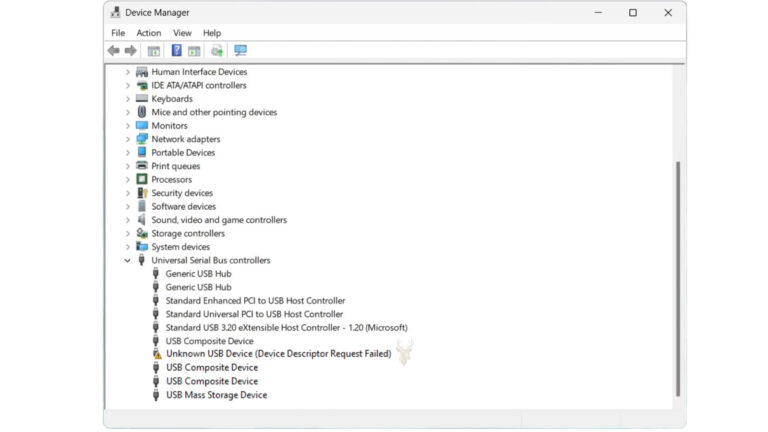
A mouse cannot maintain consistent reporting when its physical or electrical connection is unstable. A worn USB connector, damaged cable, loose front-panel port, underpowered hub, or poorly connected internal header can interrupt communication for only a fraction of a second. The mouse may not disconnect long enough for Windows to display a warning, yet the missed reports can still be felt during precise movement.
Front USB ports depend on cables running from the computer case to the motherboard. These connections can become loose, pinched, or electrically noisy. Rear motherboard ports usually provide a more direct path and are therefore useful when comparing behavior.
A mouse that remains powered is not necessarily maintaining uninterrupted data communication.
Decorative lighting can make the device appear continuously active even when movement reports are being delayed or lost. Testing another port helps separate a mouse configuration problem from a connection problem elsewhere in the USB path.
Shared USB Resources Can Introduce Additional Traffic
Multiple external ports may connect through the same internal USB controller. A mouse, keyboard, webcam, headset, capture device, external drive, and wireless adapter can therefore share controller resources even when they are plugged into separate physical ports.
Most ordinary devices coexist without causing trouble. Problems become more likely when another device transfers large amounts of data, repeatedly reconnects, or uses a faulty driver. An external storage device copying files or a high-resolution camera transmitting video can create very different USB activity from an idle keyboard.
If mouse stutter appears only while another USB device is active, the timing is significant. Moving the mouse to a port controlled by another USB controller may change the behavior without requiring replacement of the mouse.
Wireless Gaming Mice Add Radio Conditions to the Input Path
A wireless gaming mouse must transmit movement to its receiver before the receiver can deliver that information through USB. Modern low-latency wireless systems can perform extremely well, but receiver placement and local interference still influence reliability.
A receiver connected behind a metal desktop case may be separated from the mouse by the computer chassis, desk structure, cables, and other electronics. Nearby wireless adapters, routers, Bluetooth devices, or USB 3 equipment can contribute additional radio activity around the receiver.
- Movement may hesitate only at certain desk positions.
- Rapid swipes can expose interruptions that slow movement does not reveal.
- The problem may improve when the receiver is moved closer to the mouse.
- A low battery can reduce reliability before the mouse stops working completely.
A short receiver extension cable can provide a cleaner location away from the back of the computer. This test changes the wireless path without changing the mouse sensitivity, game settings, or polling rate.
Mouse Software Can Override the Expected Configuration
Gaming mice often use manufacturer software to control polling rate, sensitivity, button assignments, lighting, and application-specific profiles. The setting shown on the main screen may not be the setting active inside a particular game.
A profile can load automatically when a game starts and return to another configuration when the player exits. If the profile contains a higher polling rate, different sensitivity, or altered acceleration setting, the mouse may feel normal on the desktop but behave differently as soon as the game becomes active.
Profile Changes Can Be Easy to Miss
The software may switch configurations in the background without displaying a noticeable message. Reviewing both the general device settings and the game-specific profile can reveal a difference that is otherwise difficult to explain.
Testing with the manufacturer software closed can provide useful information, although some mice retain their settings in onboard memory. A complete comparison may require selecting a known profile, saving it to the device, and then checking whether the same behavior continues.
The Operating System Must Keep Up With Every Movement
Each movement of a gaming mouse generates reports that Windows receives through the USB subsystem before the game can react. Those reports are scheduled alongside countless other operating system tasks, including storage access, network communication, background services, audio processing, and graphics preparation.
On a healthy system these operations occur so quickly that the player never notices them. If another process briefly delays input handling, however, rapid mouse movement may feel inconsistent even though the delay lasts only a fraction of a second.
Input responsiveness depends on consistent timing just as much as it depends on fast hardware.
Very small interruptions can be noticeable during competitive games because the player continuously expects the camera to respond immediately to every hand movement.
Background Applications Can Compete for Processing Time
Many gaming computers continue running numerous applications while a game is open. Voice communication software, streaming tools, hardware monitoring utilities, RGB lighting applications, web browsers, update services, antivirus scans, and recording software all consume varying amounts of processor time.
Most of these programs operate without causing noticeable problems, but several active applications competing for resources at the same moment can produce brief interruptions that affect mouse responsiveness before they noticeably affect overall frame rates.
Low Background Activity
Input reports are generally processed with minimal interruption, allowing movement to remain consistent.
Heavy Background Activity
Frequent processor scheduling changes can introduce small timing variations that become noticeable during fast mouse movement.
Testing with unnecessary background applications temporarily closed can help determine whether another process is contributing to inconsistent input.
Sensor Tracking Quality Is Different From Polling Rate
Polling rate describes how frequently the mouse sends position information to the computer. Sensor tracking describes how accurately the mouse detects physical movement across a surface. These are separate characteristics even though they often become confused.
A mouse operating at a very high polling rate can still produce erratic movement if the sensor struggles to track the surface beneath it. Likewise, a reliable sensor operating at a moderate polling rate may provide smoother real-world performance than an unstable sensor configured for maximum reporting frequency.
Different Specifications Measure Different Behaviors
Increasing the polling rate cannot compensate for poor tracking quality, just as replacing the mouse pad will not change how frequently movement reports are transmitted.
Separating these concepts helps avoid changing settings that have little connection to the symptom being observed.
Mouse Pads Can Influence Tracking Consistency
Optical and laser sensors rely on detecting extremely small surface details while the mouse moves. Dust, excessive wear, reflective materials, or uneven textures can reduce the consistency of those readings. The result may resemble skipped frames or delayed input even though the USB connection remains stable.
Very glossy desks, transparent glass, and heavily worn cloth pads can all produce different tracking characteristics. Even a quality gaming mouse benefits from a clean, predictable surface.
- Dust accumulation can reduce tracking reliability.
- Deeply worn cloth pads may develop inconsistent friction.
- Reflective finishes can confuse some optical sensors.
- Surface contamination may affect rapid directional changes more than slow movement.
Testing on another suitable surface is a quick way to determine whether tracking conditions contribute to inconsistent movement.
Some Games Process Mouse Input Differently
Not every game interprets mouse movement in exactly the same manner. Some titles rely on raw input provided directly by the operating system, while others apply additional filtering, smoothing, acceleration, or engine-specific processing before camera movement is updated.
This explains why the same mouse may feel exceptionally responsive in one game but noticeably different in another despite identical hardware and Windows settings. Differences in game design, engine timing, and input processing all contribute to the final experience.
Consistent hardware does not guarantee identical mouse behavior across different game engines.
Comparing behavior across several games helps determine whether the symptom follows the hardware or is limited to one particular title.