Finding Out Whether the Problem Begins With a Setting, Windows, or the Hardware Beneath the Palm Rest
A laptop touchpad can stop responding at an inconvenient moment even though the keyboard, screen, and operating system continue working normally. The pointer may remain completely still, move only occasionally, jump across the screen, or respond to movement without recognizing clicks.
These symptoms do not all point to the same failure. A touchpad can be disabled accidentally through a keyboard shortcut, ignored by Windows because of a driver problem, affected by moisture or dirt, or physically disconnected inside the laptop. On some models, pressure from an expanding battery can also change the way the touchpad feels and operates.
The circumstances surrounding the failure usually provide the strongest clues. A touchpad that stops immediately after a Windows update presents a different situation from one that becomes stiff after the laptop case begins separating. Before replacing parts, it helps to determine whether the touchpad is unavailable, incorrectly configured, or mechanically damaged.
A Touchpad Can Be Disabled With a Single Keystroke
Many laptops include a function-key shortcut that turns the touchpad on and off. The shortcut is useful when typing with an external mouse because it prevents accidental pointer movement from contact with the palm. It can also be activated without the user realizing what happened.
The exact key varies by manufacturer and model. It may display a small touchpad symbol, a rectangle with a line through it, or a pointer-related icon. Some laptops require the Fn key to be held at the same time, while others respond to the function key alone.
Certain touchpads also contain a small corner that can be tapped twice to disable or enable the surface. An indicator light may change color when the touchpad is turned off, but that signal is easy to overlook.
- The touchpad stopped working after the keyboard was cleaned.
- The failure began while function keys were being used.
- An unfamiliar light appeared near one corner of the touchpad.
- An external mouse still moves the pointer normally.
- The touchpad returns immediately after pressing its enable shortcut.
Checking for an accidental disable command is a sensible first step because it requires no disassembly and does not alter personal files or installed software.
Connecting a Mouse May Change the Touchpad Setting
Some laptops are configured to disable the built-in touchpad whenever a USB or wireless mouse is connected. This behavior may be selected in Windows, a manufacturer control panel, or the firmware settings.
The setting can create confusion when the external mouse is later disconnected. If the software does not recognize the change correctly, the touchpad may remain unavailable until the option is changed or the computer is restarted.
A wireless mouse receiver is especially easy to forget because the small USB device may remain plugged into the laptop even when the mouse itself is not nearby. Windows can still consider an external pointing device present and continue applying the selected preference.
The Touchpad and Its Buttons May Fail Separately
Not every touchpad problem affects the entire assembly. On some laptops, finger movement continues controlling the pointer while the left or right button no longer clicks. On others, physical clicking works but the surface no longer detects motion or gestures.
Modern clickpads often use one large surface that moves mechanically when pressed. The click mechanism, touch sensor, and software gesture functions are related, but they are not identical. A mechanical obstruction can interfere with clicking while movement remains normal, and a driver problem can disable gestures without affecting basic pointer control.
| Touchpad Behavior | Possible Area to Examine |
|---|---|
| The pointer does not move at all | Disabled settings, driver detection, cable connection, or touchpad electronics. |
| Movement works but physical clicking does not | Button mechanism, case pressure, debris, or mechanical wear. |
| Clicking works but scrolling and gestures do not | Driver features or gesture settings. |
| The pointer moves erratically | Moisture, contamination, electrical interference, or sensor damage. |
| The touchpad feels raised or unusually stiff | Internal pressure, including possible battery expansion. |
Describing exactly which functions remain available produces a more useful diagnosis than treating every touchpad complaint as complete failure.
Windows Must Detect the Touchpad Before Its Settings Appear
A working touchpad normally appears in Windows as a pointing device, mouse-compatible device, or manufacturer-specific touchpad. If Windows cannot detect it, the usual touchpad options may disappear from the control panel or settings screen.
This can happen after a system reinstall, driver removal, failed update, or restoration from an image created for a slightly different laptop configuration. Windows may install a basic driver that supports pointer movement but does not provide scrolling, palm rejection, tapping, or multi-finger gestures.
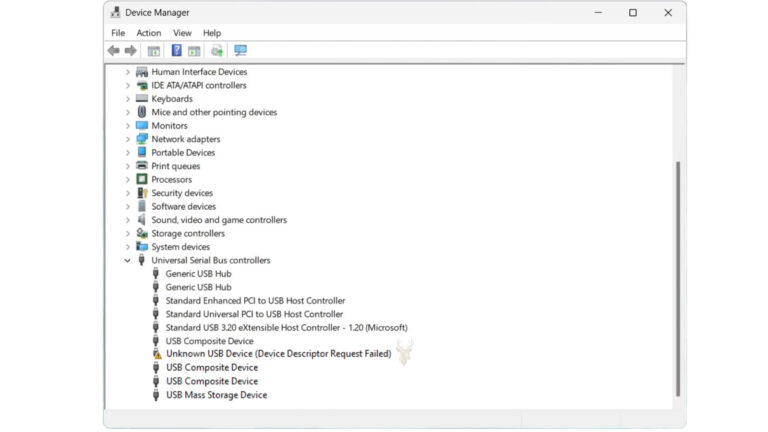
In other cases, the device may appear with an error symbol or remain listed as unknown hardware. That does not immediately prove the touchpad is defective. It shows that communication between the operating system and the device has not been established correctly.
Driver Problems Often Affect Features Before Basic Movement
Touchpad drivers provide more than simple cursor control. They interpret taps, scrolling, edge movement, palm rejection, button zones, and gestures involving two or more fingers. When the wrong driver is installed, the pointer may still move while the touchpad loses many of the functions the user expects.
A driver supplied directly by Windows may provide basic operation, while the laptop manufacturer’s package adds model-specific features. Installing a driver for the wrong touchpad brand can also create instability because laptop manufacturers sometimes use different suppliers within the same product family.
The timing of the problem matters. If scrolling and tapping disappear immediately after Windows is reinstalled or updated, software deserves consideration before the palm rest is opened.
Moisture Can Cause Erratic Pointer Movement
Touchpads detect very small electrical changes produced by a finger moving across the surface. Moisture, cleaning solution, skin oils, and residue can interfere with that sensing process. The pointer may jump, move without clear direction, select items unexpectedly, or stop responding until the surface dries.
A slightly damp finger can produce temporary erratic behavior without causing permanent damage. Liquid that enters around the touchpad edges is more concerning because it can reach the cable, circuit board, buttons, or motherboard beneath the palm rest.
Cleaning should be performed with the laptop powered down and with very little moisture. Liquid should never be sprayed directly onto the touchpad or allowed to collect along the edges of the enclosure.
A Recent Spill Changes the Priority of Troubleshooting
When touchpad trouble begins after a drink spill, ordinary setting changes are no longer the only concern. Even if the keyboard and screen continue working, liquid may have entered the palm-rest area and begun affecting small connectors or conductive paths.
The touchpad may fail immediately, recover temporarily after drying, and then develop new symptoms as residue and corrosion remain inside. Repeatedly powering the laptop on to see whether the touchpad has returned can allow electrical damage to continue.
- The touchpad became erratic immediately after the spill.
- Buttons feel sticky or remain pressed.
- The pointer moves without being touched.
- Keyboard keys near the touchpad also behave incorrectly.
- The problem changes as the laptop warms during use.
In a spill-related situation, protecting the computer from further electrical damage is more important than restoring pointer control temporarily with a settings adjustment.
Palm Contact Can Be Mistaken for Touchpad Failure
Laptop touchpads often include palm-rejection features intended to prevent accidental pointer movement while typing. If the sensitivity is set too aggressively, the touchpad may ignore legitimate finger movement for a short period after keyboard activity.
The user may notice that the pointer works normally until typing begins, then seems unresponsive for a moment. This behavior differs from a disconnected touchpad because control returns after the delay or when the hands move away from the keyboard.
Adjusting sensitivity can improve the balance between preventing accidental movement and allowing the touchpad to respond naturally during everyday work.
Touchpad Sensitivity Can Change the Way Normal Movement Feels
A touchpad does not respond only to whether a finger is present. Its software also interprets pressure, movement speed, contact area, and the length of time a finger remains on the surface. Sensitivity settings influence how easily those movements become pointer activity.
If sensitivity is set too low, light finger movement may be ignored and the pointer can feel slow or unresponsive. If it is set too high, the cursor may move when a palm brushes the edge of the touchpad or when the user rests a second finger nearby.
A sudden change after a driver update, system recovery, or manufacturer utility reset may reflect altered settings rather than a mechanical failure. Comparing the current behavior with the available touchpad controls can reveal whether the device is still being detected correctly but responding under different thresholds.
Multi-Finger Gestures Depend on More Than the Basic Pointer Driver
Two-finger scrolling, pinch-to-zoom, three-finger shortcuts, edge swipes, and other gestures require additional driver support. A touchpad can continue moving the pointer while those features disappear completely.
This often occurs when Windows replaces the manufacturer driver with a basic compatible driver. The laptop remains usable, but the touchpad behaves more like a simple mouse than the device originally installed by the manufacturer.
- The pointer still moves normally.
- Two-finger scrolling no longer works.
- Tapping must be replaced with physical clicking.
- Gesture options disappear from the control panel.
- The problem begins after Windows or the driver is updated.
When only advanced features are missing, replacing the entire touchpad would be premature. The underlying sensor may still be functioning correctly.
A Loose Ribbon Cable Can Interrupt the Touchpad Completely
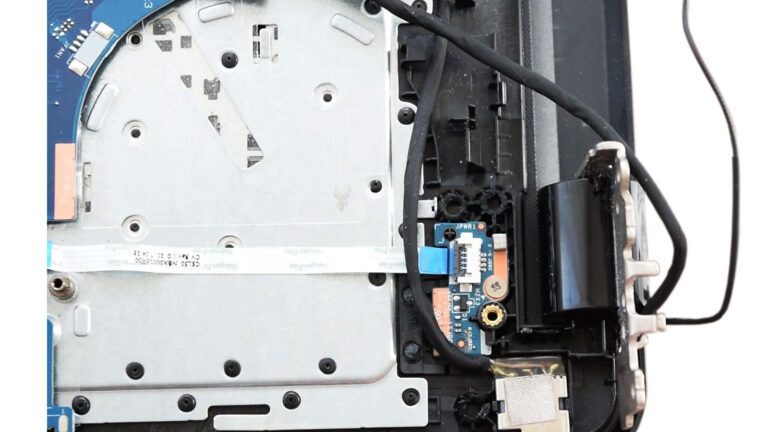
The touchpad usually connects to the motherboard through a thin ribbon cable beneath the palm rest. This cable carries power and communication signals between the touchpad assembly and the laptop.
If the connector is not fully seated, the touchpad may disappear from Windows, stop responding intermittently, or fail after the laptop is moved. The cable can become loose during previous repair work, battery replacement, keyboard service, or disassembly of the bottom cover.
Ribbon cables are delicate. Their locking tabs can crack, the conductive end can crease, and repeated insertion can wear the contact area. A cable that looks connected may still fail if it is not aligned evenly inside the socket.
Previous Repair Work Can Provide an Important Clue
A touchpad problem that begins immediately after another repair should be considered in relation to the area that was opened. Battery replacement, keyboard service, palm-rest replacement, storage upgrades, and motherboard work can all require access near the touchpad cable.
The new symptom does not necessarily mean the touchpad itself was damaged. A connector may have been left partly open, a cable may be trapped beneath a bracket, or a screw may be applying pressure where it did not before.
Rechecking the work in the same sequence it was performed often provides more useful information than installing several drivers or changing unrelated Windows settings.
Battery Swelling Can Change the Touchpad Before Other Symptoms Appear
Many internal laptop batteries are positioned directly beneath the touchpad and palm rest. When a battery expands, it can push upward against the underside of the touchpad assembly.
The first noticeable symptom may be a clickpad that feels unusually firm, requires more pressure, or no longer sits level with the surrounding case. The pointer may continue moving normally because the electronic sensor still works while the mechanical clicking structure is being compressed from below.
- The touchpad surface appears slightly raised.
- One corner clicks while another does not.
- The bottom cover begins separating.
- The laptop no longer rests evenly on a flat surface.
- The palm-rest area feels tighter than before.
Pressure caused by an expanded battery should not be corrected by tightening the case screws. Forcing the enclosure closed can place additional stress on the battery cells.
Debris Can Interfere With Mechanical Buttons
Touchpads with separate left and right buttons contain small moving parts beneath the visible button caps. Dust, crumbs, dried residue, and worn plastic can prevent those parts from moving freely.
The button may feel sticky, remain partially pressed, or require extra force. In some cases, the click sound remains normal even though the internal switch does not register every press.
Cleaning the surface may improve contamination around the edges, but forcing liquid or sharp objects beneath the button can damage the switch or carry debris farther inside. Mechanical resistance should be inspected rather than treated with heavy pressure.
Physical Wear Can Affect Clicking Before Pointer Movement
Repeated clicking places stress on the small switches, hinges, springs, and plastic supports beneath the touchpad. After years of use, one button may become less responsive or lose its normal tactile feel.
This type of wear usually develops gradually. The user may begin pressing harder, clicking several times, or choosing a different area of the touchpad before recognizing that the mechanism has changed.
Software cannot restore a worn switch or cracked support. If movement and tapping remain reliable while one physical button continues failing, the mechanical portion of the assembly becomes a stronger suspect.
The Pointer Can Jump When the Charger Introduces Electrical Noise
Because a touchpad senses small electrical changes, poor grounding or electrical interference from a charger can occasionally affect pointer behavior. The cursor may become unstable only while the power adapter is connected and return to normal when the laptop runs from battery power.
This pattern may involve a damaged adapter, an unsuitable replacement charger, a problem with the electrical outlet, or grounding differences in the building. The touchpad itself may be functioning normally but receiving a noisier electrical environment than it was designed to handle.
- Observe the touchpad while the laptop is unplugged.
- Connect the charger and repeat the same movements.
- Note whether the cursor begins jumping or selecting items.
- Test with a known compatible adapter when available.
- Compare behavior at another electrical outlet.
A symptom tied only to one charger or outlet should be separated from a touchpad that behaves incorrectly under every power condition.
External Mice Help Determine Whether Windows Is Still Responsive
Connecting a USB mouse can help distinguish a touchpad problem from a frozen operating system. If the external mouse controls the pointer normally, Windows is still accepting pointer input and the problem is more likely limited to the built-in device.
If neither the touchpad nor the external mouse responds, the computer may be locked up, overloaded, or experiencing a broader input problem. In that situation, replacing the touchpad would not address the immediate cause.
An external mouse is therefore useful as a comparison tool, but its success does not reveal whether the internal failure comes from settings, drivers, cabling, or the touchpad electronics.
Testing Outside Windows Can Separate Software From Hardware
Some laptops allow touchpad movement inside the firmware setup screen or built-in diagnostics. If the touchpad works there but stops after Windows loads, the hardware connection may still be intact and the operating system becomes a more likely area to investigate.
If the touchpad remains unavailable before Windows starts, software inside the operating system is less likely to be responsible. The device may be disabled in firmware, disconnected internally, or no longer functioning electronically.
Not every firmware interface supports touchpad input, so lack of movement there is meaningful only when the specific laptop normally allows it.
Intermittent Operation Often Points Toward Movement or Pressure
A touchpad that works only when the laptop is held a certain way may be affected by a loose cable, cracked palm rest, shifting battery, or flex in the chassis. The symptom can appear when the screen is opened, when the laptop is lifted by one corner, or when pressure is placed near the touchpad.
Repeated twisting or pressing should not be used as a long-term workaround. Movement that temporarily restores the connection may also worsen the damaged cable, connector, or enclosure.
Recording which physical movement changes the behavior can help identify the area that requires inspection without repeatedly stressing the computer.
A Touchpad That Disappears From Windows Should Be Traced Carefully
When the touchpad no longer appears in Device Manager or the available mouse settings, Windows is not receiving normal communication from the device. That can happen because the touchpad is disabled, the driver is missing, the ribbon cable is disconnected, or the electronics inside the assembly have failed.
The disappearance itself does not identify which of those conditions is responsible. A device disabled through firmware may be just as absent from Windows as one with a damaged cable. The history of the problem becomes important, especially whether it began after disassembly, a spill, an update, or a physical impact.
Repeatedly installing unrelated drivers can make the picture less clear. Confirming the exact touchpad model and checking whether Windows detects any pointing device at all provides a more useful starting point.
Firmware Settings Can Disable the Touchpad Before Windows Starts
Some laptops include a touchpad option inside the BIOS or firmware setup. The setting may allow the device to remain active, operate in a basic compatibility mode, or become disabled entirely.
A firmware reset, motherboard service, or accidental setting change can alter that behavior. In that situation, Windows cannot restore the touchpad because the device has already been turned off at a lower level.
- The touchpad is absent immediately after startup.
- Windows settings no longer show any touchpad controls.
- An external mouse continues working normally.
- The problem began after firmware settings were changed.
- Restoring the correct firmware option makes the device reappear.
Firmware menus differ widely, so the absence of a touchpad option does not mean the laptop lacks one. Some manufacturers simply do not expose that control to the user.
System Restore Can Help Only When the Cause Is Software
If the touchpad stopped working immediately after a driver installation, Windows update, or software change, returning the system to an earlier configuration may be useful. This can restore previous drivers and settings without opening the laptop.
System Restore cannot reconnect a ribbon cable, remove corrosion, repair a cracked click mechanism, or relieve pressure from a swollen battery. Its usefulness depends entirely on whether the failure began inside Windows.
A successful restoration supports a software explanation. No change after restoration does not automatically prove hardware failure, but it reduces the likelihood that one recent Windows change caused the problem.
Temporary Workarounds Should Not Hide Physical Warning Signs
An external mouse can keep the laptop usable when the built-in touchpad fails. That can be practical for a software problem under investigation or a touchpad awaiting replacement.
The workaround becomes less appropriate when the touchpad is raised, the palm rest is separating, the case no longer closes correctly, or the buttons are being forced upward. Those signs suggest an internal condition that may continue worsening even though pointer control has been restored through another device.
External control solves the input problem only. It does not correct battery expansion, liquid damage, cable movement, or mechanical pressure inside the enclosure.
Touchpad Replacement May Involve More Than One Part
On some laptops, the touchpad is available as a separate component. On others, it is attached permanently to the palm-rest assembly and must be replaced together with the surrounding plastic, buttons, fingerprint reader, or keyboard frame.
Part compatibility can depend on the exact laptop model, production revision, color, cable type, and whether separate buttons are included. Two palm rests that look nearly identical from the outside may use different connectors or mounting points underneath.
- Confirm the full laptop model and revision.
- Compare the original touchpad or palm-rest part number.
- Verify whether the ribbon cable is included.
- Check for integrated buttons or fingerprint hardware.
- Inspect mounting points before reassembly.
Ordering by appearance alone can lead to a replacement that fits the opening but does not communicate with the motherboard correctly.
Cable and Connector Inspection Should Come Before Replacing the Assembly
A failed touchpad assembly and a disconnected ribbon cable can produce nearly identical symptoms. Before replacing the visible component, the cable path and motherboard connector should be inspected for poor seating, creases, contamination, or damage to the locking mechanism.
Some connectors use a small hinged latch that must be opened before the ribbon cable is inserted. If that latch breaks, the cable may slide into place without maintaining reliable contact. Tape or pressure may provide temporary operation but rarely creates a durable repair.
Corrosion around the connector can also interrupt communication after a spill. Cleaning the surface of the touchpad does not address residue that has already reached the internal contacts.
Testing After Repair Should Cover More Than Cursor Movement
A repaired or replaced touchpad should be checked through the full range of functions the laptop supports. Basic movement may return even when clicking, tapping, scrolling, palm rejection, or multi-finger gestures remain unavailable.
- Move the pointer across the entire touchpad surface.
- Test left and right clicking.
- Confirm tapping and drag operations.
- Check scrolling and supported gestures.
- Type several sentences and observe palm rejection.
- Test while connected to and disconnected from the charger.
Testing several functions helps reveal whether the repair restored the complete device or only its most basic operation.
Repeated Failure After Replacement Can Point Elsewhere
If a known compatible touchpad remains undetected, the problem may involve the ribbon cable, connector, motherboard circuitry, firmware setting, or driver rather than the original touchpad alone.
A replacement that works briefly and then fails when the chassis moves may suggest pressure or connector movement. A replacement that behaves erratically only while charging may direct attention back toward electrical interference.
Replacing the same part repeatedly without reviewing the surrounding system can increase cost while leaving the original cause untouched.
The Symptom Usually Points Toward the Right Layer
A missing device suggests detection or connection trouble. Lost gestures point more strongly toward drivers and settings. Stiff clicking raises concern about mechanical obstruction or internal pressure, while erratic movement after a spill or with one charger suggests contamination or electrical interference.
These distinctions matter because a touchpad problem can begin in software, firmware, cabling, the palm-rest structure, the battery, or the touchpad electronics themselves. Treating every symptom as the same failure often leads to unnecessary parts replacement.
The most reliable direction comes from comparing what still works, when the behavior changes, and what happened immediately before the problem began. That sequence usually reveals whether the touchpad has been disabled, disconnected, obstructed, or physically damaged.