How Technicians Move from a Reported Symptom to the Actual Cause
A customer may describe a computer as slow, dead, frozen, overheating, unable to charge, or stuck during startup. Those descriptions are useful, but they identify only what the user can observe. A computer diagnostic begins by determining what is causing that behavior and whether the problem involves hardware, software, electrical power, temperature, storage, or several conditions working together.
The visible symptom does not always point directly to the failed component. A black screen may come from the display, memory, motherboard, graphics hardware, or operating system. A laptop that will not charge may have a damaged adapter, battery, connector, or charging circuit. A slow computer may be affected by storage performance, limited memory, overheating, malware, or unnecessary background software.
For this reason, diagnosis should happen before parts are ordered or major software changes are made. The objective is to reduce uncertainty until the actual source of the problem can be identified with reasonable confidence.
The Reported Problem Is the Starting Point
The diagnostic process usually begins with information about how the problem developed. Details that may appear minor can become important when they reveal a pattern. Knowing whether the failure began suddenly, followed an update, appeared after a drop, or became progressively worse can change the direction of testing.
- When did the problem begin?
- Did anything change immediately beforehand?
- Does the problem happen every time or only occasionally?
- Does it occur during a particular program or workload?
- Has the computer been dropped, overheated, or exposed to liquid?
- Are important files still stored on the system?
A complete description can prevent unnecessary testing and help reproduce intermittent failures that might otherwise remain hidden during a brief inspection.
Visual Inspection Comes Before Disassembly
Before opening the computer, a technician can often learn a great deal from its external condition. Damaged connectors, missing screws, cracked hinges, blocked vents, loose panels, swollen batteries, and signs of impact may help explain the reported behavior.
The power adapter, charging cable, display, keyboard, ports, and ventilation openings may also be inspected for obvious damage. On a desktop computer, external cables and connected devices are reviewed before assuming the problem originates inside the case.
- Condition of the charger and power cable
- Damage around USB, display, and charging ports
- Cracks or separation in the enclosure
- Blocked ventilation openings
- Signs of liquid exposure
- Unusual odors, discoloration, or heat damage
Visual inspection does not replace testing, but it can reveal physical evidence that guides the next step and prevents the diagnostic process from overlooking an obvious cause.
Reproducing the Symptom
Whenever possible, the computer should be tested under the same conditions that produced the problem. A system that restarts only during gaming requires a different workload than one that freezes while sitting idle. A charging problem may need to be observed with the original adapter, battery, and cable position.
Reproducing the symptom confirms that the problem is still present and provides an opportunity to observe what happens immediately before, during, and after the failure. Temperature changes, error messages, fan behavior, power lights, unusual sounds, and delayed responses can all provide useful evidence.
| Reported Symptom | Useful Test Condition |
|---|---|
| Computer restarts during games | Apply a controlled processor and graphics workload |
| Laptop charges intermittently | Observe adapter, connector, and charging status together |
| Computer becomes slow over time | Monitor temperature, memory, storage, and background activity |
| Black screen after startup | Compare internal display, external display, and startup behavior |
| Drive disconnects randomly | Monitor power, cable connection, and storage communication |
An intermittent problem may require repeated testing because it may not appear during the first attempt. Documenting the conditions under which the failure occurs helps avoid replacing a component simply because the symptom disappeared temporarily.
Separating Hardware from Software
One of the earliest diagnostic goals is determining whether the problem is primarily related to hardware or software. The distinction is not always obvious because hardware faults can cause Windows errors, while damaged software can make healthy hardware appear unreliable.
A technician may compare behavior inside and outside the operating system. If the computer freezes in the BIOS, fails a memory test, or shuts down before Windows loads, hardware becomes a stronger possibility. If the computer remains stable during independent testing but fails only within a particular Windows installation, software or driver problems deserve greater attention.
- Does the issue occur before Windows begins loading?
- Can the computer remain stable inside the BIOS?
- Does the problem appear in Safe Mode?
- Do independent hardware tests report errors?
- Did the problem begin after a driver or software change?
- Does another operating environment behave differently?
This comparison narrows the diagnostic path without assuming that every Windows error is caused by software or that every startup failure requires hardware replacement.
Testing Should Follow the Evidence
A useful diagnostic is not simply a list of every test available. It follows the evidence produced by the reported symptoms and initial observations. Testing unrelated components can consume time while producing information that does not help explain the failure.
If a laptop shows no charging indication, power-path testing becomes more relevant than checking browser extensions. If files are corrupt and the hard drive is clicking, storage safety becomes more important than running extensive software repair utilities. If a system overheats under load, airflow and temperature measurements deserve attention before Windows is reinstalled.
The most efficient diagnostic process moves from broad possibilities toward increasingly specific tests until the remaining evidence points to a practical conclusion.
Power Testing Begins at the Source
A computer that shows no signs of power may have a failed internal component, but diagnosis usually begins with the electrical source rather than the motherboard. Wall outlets, surge protectors, power cables, laptop adapters, batteries, and charging connectors can all interrupt power before it reaches the main circuit board.
On a laptop, the adapter output can be compared with the manufacturer’s specifications while the connector and charging indicator are observed for intermittent behavior. On a desktop, the power cable, outlet, internal power supply, and motherboard connections may be examined before more advanced testing begins.
- Confirm that the electrical outlet is functioning.
- Inspect the power cable or AC adapter for visible damage.
- Check whether power or charging indicators respond normally.
- Observe whether the connection changes when the cable is moved.
- Verify that the adapter or power supply matches the computer’s requirements.
Beginning at the source helps prevent a simple external power problem from being mistaken for an expensive internal failure.
Memory Testing Requires More Than One Observation
Defective or unstable memory can create blue screens, random restarts, freezing, corrupted files, startup failures, and application crashes. Because these symptoms overlap with storage, driver, and motherboard problems, memory should be evaluated carefully rather than blamed based on one error message.
Testing may include checking whether the system recognizes the expected amount of RAM, running memory diagnostics, reseating modules, or testing one module at a time when the computer contains more than one. Intermittent errors may require repeated testing because a module can pass a brief check and still fail under certain temperatures or workloads.
| Memory Observation | Possible Direction |
|---|---|
| Computer detects less RAM than installed | Module, slot, or motherboard issue |
| Errors appear during memory testing | Unstable module or memory subsystem |
| System starts with one module but not another | Possible defective module |
| Freezing occurs only under heavy multitasking | Capacity or stability concern |
| Different blue screens appear repeatedly | Memory should be included in testing |
Storage Health Must Be Considered Carefully
Storage devices contain the operating system, applications, and personal files, so testing them requires a balance between diagnosis and data protection. A drive showing slow access, repeated errors, unusual noises, or communication problems may become less reliable as testing continues.
Diagnostic tools may review drive health information, file-system errors, transfer behavior, and communication stability. The results should be interpreted together with the symptoms because a warning value does not always confirm immediate failure, while a drive that appears healthy may still have a developing electronic or mechanical problem.
- Startup time and file-access behavior
- SMART health information
- Read and write errors
- Connection stability
- Mechanical sounds
- File corruption or missing data
When important files are involved, protecting the data may become more important than completing every available test. Diagnostic activity should never ignore the possibility that the storage device is already deteriorating.
Temperature Monitoring Reveals Problems Under Load
A computer may appear stable while idle and become unreliable only after the processor, graphics hardware, or power components warm up. Temperature monitoring helps determine whether reduced performance, fan noise, restarts, or shutdowns correspond with rising heat.
The computer may be observed during light use and then under a controlled workload. If temperatures increase rapidly while fan speed rises and performance decreases, the cooling system may not be removing heat efficiently. Dust, blocked airflow, worn fans, deteriorated thermal material, or excessive software load may all contribute.
Temperature readings are most useful when interpreted together with workload, fan behavior, ambient conditions, and the specific design of the computer. A single number without context rarely provides a complete diagnosis.
Windows and Driver Evaluation
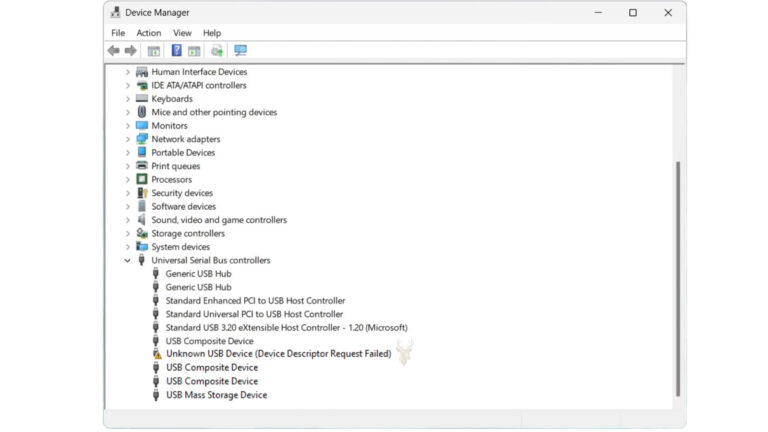
When hardware testing does not reveal an obvious fault, attention may shift toward Windows, device drivers, services, updates, and installed software. Error logs, startup behavior, Device Manager, Safe Mode, and recent system changes can help identify whether instability began after a software event.
A diagnostic does not assume that reinstalling Windows is always the answer. Reinstallation can remove useful evidence and may temporarily hide a hardware problem that later returns. The decision should be based on the condition of the operating system and the results of earlier testing.
- Review recent updates and driver changes.
- Check Device Manager for hardware errors.
- Compare normal startup with Safe Mode.
- Inspect Windows event records.
- Test whether the problem appears in another user profile or operating environment.
- Identify software that begins automatically with Windows.
Intermittent Failures Require Patience
Some of the most difficult computer problems occur only occasionally. A laptop may charge correctly during inspection and fail later when the cable is moved. A desktop may run for hours before restarting. A storage device may disconnect only after warming up.
These failures may require repeated testing, controlled movement, temperature changes, or longer observation periods before the pattern becomes clear. Declaring the computer healthy after one successful startup can miss a problem that appears only under specific conditions.
| Intermittent Behavior | Useful Observation |
|---|---|
| Charges only in certain cable positions | Monitor connector and adapter movement |
| Restarts after extended use | Track temperature and power stability |
| Drive disappears after warming up | Observe storage communication over time |
| Black screen appears randomly | Compare display, memory, and startup behavior |
| Freezes only during one workload | Reproduce the same workload under monitoring |
Diagnostic Tools Do Not Replace Interpretation
Software utilities and hardware testers can provide useful measurements, but they do not always explain why a result appeared. A temperature reading may be high because of dust, a failing fan, heavy software activity, or an incorrect sensor. A storage warning may reflect gradual wear, communication problems, or an immediate risk to data.
The technician’s role is to compare test results with the reported symptoms, physical condition, and behavior of the complete system. A single failed test may be significant, but it should still be reviewed in context before a repair decision is made.
Good diagnosis depends on evidence, comparison, and elimination. Tools collect information; interpretation turns that information into a practical understanding of what the computer actually needs.
Confirming the Cause Before Replacing Parts
One of the primary objectives of a computer diagnostic is preventing unnecessary repairs. Replacing hardware based only on symptoms can become expensive when several different components are capable of producing similar behavior. A computer that will not start, for example, may have a defective power supply, damaged motherboard, unstable memory, storage failure, or another condition entirely.
By confirming the actual source of the problem before ordering replacement parts, the repair process becomes more focused and avoids introducing new variables that may complicate diagnosis further.
- Confirm the reported symptom.
- Eliminate unrelated possibilities.
- Verify test results using more than one observation when practical.
- Compare hardware findings with software behavior.
- Recommend replacement only after sufficient evidence has been collected.
Different Computers Require Different Diagnostic Approaches
Although the overall diagnostic philosophy remains similar, laptops, desktop computers, gaming systems, and all-in-one computers often require different testing methods because of their internal design. A desktop usually provides easy access to individual components, while many laptops require careful disassembly before internal hardware can be inspected safely.
Modern computers also integrate more functions directly onto the motherboard than older systems did. As a result, diagnosis increasingly focuses on understanding how several electronic systems interact rather than testing isolated components one at a time.
| Computer Type | Diagnostic Considerations |
|---|---|
| Desktop Computer | Individual components are generally easier to access and isolate. |
| Laptop | Compact internal design often requires more careful disassembly. |
| Gaming Computer | Higher workloads increase attention to cooling and power delivery. |
| All-in-One Computer | Integrated construction may require specialized access procedures. |
When Data Protection Becomes Part of the Diagnostic
Some computer problems involve little risk beyond inconvenience, while others may place important files in danger. If a storage device is producing unusual noises, disconnecting unexpectedly, or reporting repeated read errors, protecting personal data may become just as important as identifying the hardware fault.
Whenever valuable documents, business records, photographs, or other irreplaceable files are involved, the diagnostic process may need to balance additional testing with preserving the information already stored on the computer. Continuing extensive testing on an unstable storage device is not always the safest decision.
Readers interested in learning more about protecting information stored on failing devices can also review our Data Recovery page, which explains the different situations where recovering important files may become the primary objective.
Diagnosis Is an Investigation, Not a Guess
Effective troubleshooting follows evidence instead of assumptions. Every observation, measurement, and test result either strengthens or eliminates one or more possible explanations until the remaining evidence consistently points toward the actual cause.
This systematic approach differs from replacing parts simply because they are commonly associated with a particular symptom. Two computers displaying identical behavior may require completely different repairs once the underlying cause has been identified.
Understanding this process also helps explain why careful diagnosis sometimes takes longer than expected. The objective is not to replace components as quickly as possible but to identify the correct solution with the greatest practical confidence.
Looking Beyond the First Symptom
The symptom that first attracts attention is not always the root cause of the problem. A slow computer may actually be overheating. Startup failures may originate from unstable storage rather than Windows itself. Charging problems may begin with a damaged connector instead of the battery. Random restarts may ultimately trace back to cooling, memory, or power delivery.
By approaching each computer as a complete system rather than focusing immediately on one suspected component, technicians can build a clearer understanding of how the hardware and software interact. That broader perspective often leads to more accurate repairs and fewer unnecessary replacements.
A thorough diagnostic is therefore much more than running software utilities or replacing the most likely part. It is a structured investigation that combines observation, testing, technical knowledge, and practical experience to determine why the computer behaves the way it does before deciding how the problem should be corrected.