
Computer Repair Saga Bay
Computer Repair for Homes Near SW 205th Street, Saga Lake, and the South Cutler Bay Canal Routes
Saga Bay is part of the south Cutler Bay residential area where neighborhood streets, lake views, park activity, school routines, home offices, and family devices all depend on computers that can start reliably and stay stable. Around SW 205th Street, SW 82nd Avenue, Saga Bay Park, and Saga Lake Park, a damaged laptop or desktop can interrupt remote work, student assignments, stored photos, security camera access, business files, household records, and everyday communication without much warning.
Computer repair in this area should be ready for machines that fail from real hardware stress, not just basic cleanup. A desktop tower may need board, power supply, cooling, or graphics testing; a laptop may have a cracked frame, weak charging circuit, damaged screen cable, or failing SSD; a MacBook may need logic board inspection after moisture or battery swelling; and an all-in-one may require careful internal access when the display, fan, drive, or power section stops behaving correctly.
Service Support Near Saga Bay Park, Black Point Marina Routes, and Old Cutler Road Connections
Local travel around this area often connects homes to Saga Bay Park’s courts and walking path, Saga Lake Park’s open space, Old Cutler Road, Caribbean Boulevard, South Dixie Highway, Lakes by the Bay, and the roads leading toward Black Point Park and Marina. Those routes make it common for computers to move between bedrooms, kitchen counters, home offices, school bags, work vehicles, and shared family spaces, which can create stress on ports, hinges, drives, screens, and cooling systems over time.
A complete repair approach for this area can include no-power diagnostics, motherboard testing, damaged-port replacement, screen assembly repair, fan and heat sink service, SSD or hard drive evaluation, MacBook battery and keyboard service, custom desktop troubleshooting, all-in-one disassembly, data recovery support, and component-level work when the fault is on the board. The purpose is to find the failing section, repair it properly, and return a computer that can handle normal daily use again.
A Repair Process for Waterfront-Area Homes, Student Laptops, Custom Desktops, MacBooks, and Shared Family Systems
Computer repair in this area should begin with a clear look at how the machine is used and where the failure appears. A system used for schoolwork, home office files, marina-related errands, family photos, gaming, security access, or daily online accounts may show one visible symptom while the real cause sits deeper in the power section, cooling path, storage device, display assembly, keyboard area, port connection, or motherboard.
Match the Failure to the Way the Computer Is Used
The repair starts by connecting the symptom to the customer’s normal setup. A laptop carried between rooms, a desktop kept near a wall, a MacBook used for school or work, or an all-in-one shared by the household can each fail for different reasons. That usage pattern helps point testing toward impact damage, heat buildup, charger wear, storage stress, board trouble, or display strain.
Open the Right Section Instead of Disturbing the Whole Machine
Once the likely failure area is narrowed down, the computer can be inspected with less unnecessary handling. The work may focus on a display cable, charging circuit, fan assembly, SSD connection, RAM seating, liquid-damaged board area, hinge mount, power supply, or internal port instead of taking apart unrelated sections that do not need to be touched.
Verify Stability Before the Device Returns to Daily Use
After the repair is completed, the system is checked for the conditions that matter after it leaves the bench. That can include charging without movement, steady startup, normal fan behavior, screen response through lid movement, drive detection after restart, keyboard and trackpad function, port connection strength, and operation long enough to confirm the original failure is no longer showing.
Repair Services for Desktops, Laptops, MacBooks, Gaming PCs, Storage Devices, Cooling Systems, Displays, and Internal Connections
Computer service in this area should cover the hardware problems that actually stop a machine from being dependable at home. Some systems need display repair, some need cooling work, some need drive recovery, some need custom desktop troubleshooting, and others need internal connector or board attention after years of movement, heat, dust, or heavy use. The service should be able to open the computer, test the failing section, replace damaged parts, and confirm that the machine can work again without the same issue returning.
Gaming PC Graphics Card and Video Output Repair
A gaming or custom desktop that powers on but gives no display may need testing around the graphics card, PCIe slot, monitor ports, power cables, motherboard lanes, and driver-independent hardware behavior. Repair can include reseating components, checking power delivery to the GPU, replacing damaged video hardware, and correcting internal faults that prevent stable image output.
Laptop Backlight, Display Cable, and Screen Panel Replacement
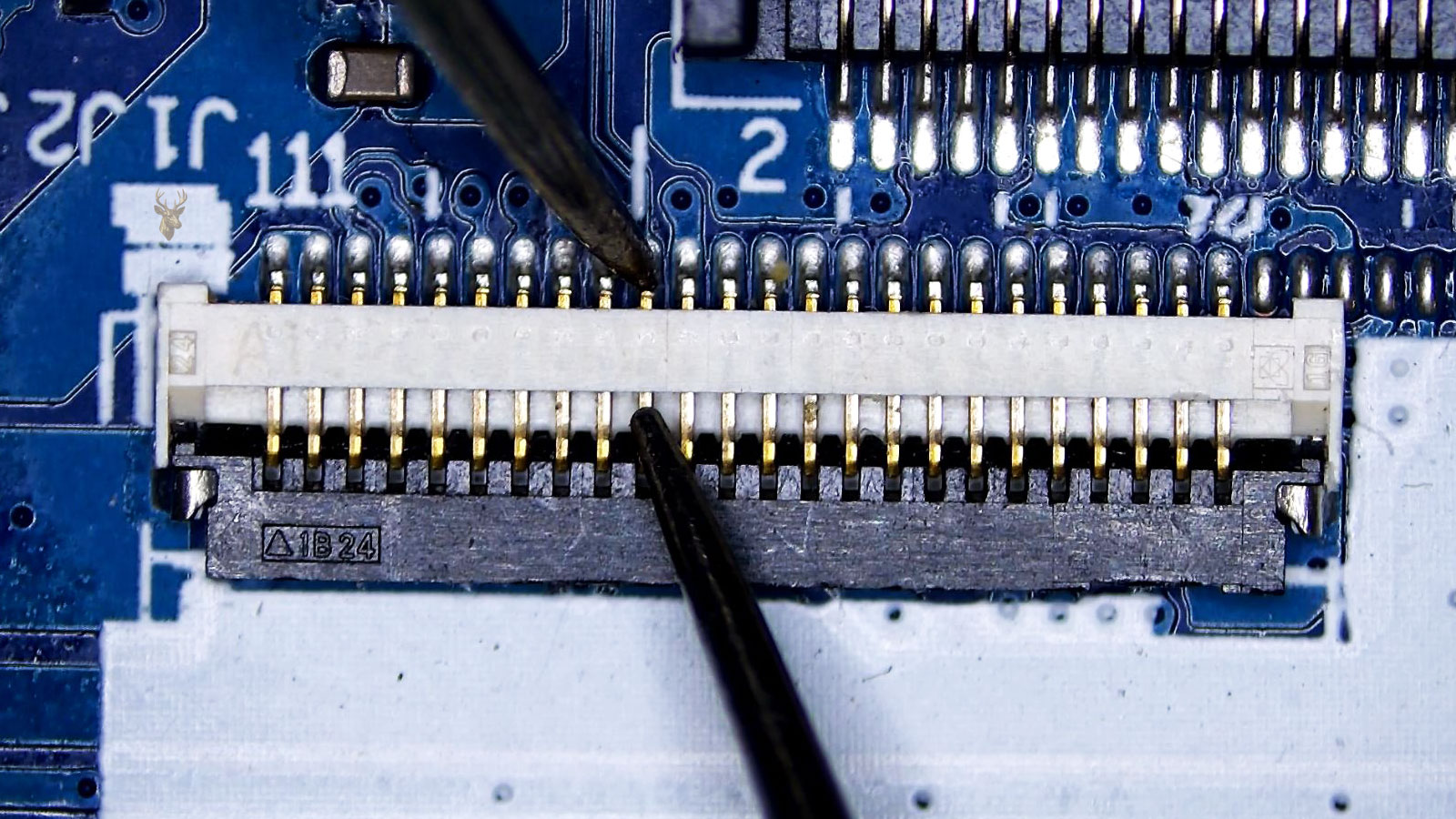
A laptop screen that stays dim, flashes, shows lines, loses image at certain angles, or displays only on an external monitor may have a failing panel, damaged backlight circuit, worn eDP cable, or loose internal screen connection. Proper service includes checking the display path before replacing the correct screen or cable assembly.
Failing SSD, Hard Drive, and Data Transfer Recovery
Storage problems can appear as disappearing folders, freezing during startup, clicking drives, slow file access, blue screens, or systems that no longer recognize the boot device. Repair may include drive health testing, safe file transfer, SSD replacement, operating system migration, and recovery attempts before the original drive becomes unreadable.
Cooling Fan, Heat Sink, Thermal Pad, and Airflow Service
A computer that runs hot, shuts down during video calls, slows down during games, or becomes loud under light use may need internal cooling service. This can include cleaning blocked vents, replacing worn fans, servicing heat sinks, renewing thermal compound, installing proper thermal pads, and checking airflow inside laptops, desktops, and compact systems.
MacBook Battery Swelling, Sleep Failure, and Internal Power Service
A MacBook with a lifted trackpad, uneven bottom case, sudden sleep behavior, weak runtime, or shutdowns away from the charger may have battery swelling or internal power-control trouble. Service can include battery inspection, safe replacement, connector checks, board review, and testing to confirm the machine charges and sleeps correctly afterward.
Broken USB, HDMI, Audio, and SD Card Reader Repair
Ports that feel loose, stop detecting accessories, work only when pressure is applied, or fail after a cable was pulled can often be repaired without replacing the entire computer. Service can include inspecting solder joints, replacing damaged ports, repairing internal connector boards, and testing devices such as external drives, monitors, headphones, cameras, and card readers.
Warning Signs From Graphics Hardware, Storage Devices, Cooling Parts, MacBook Batteries, Display Circuits, and Damaged Ports
Computer problems in this area may show up while the machine is doing normal home tasks: opening school files, loading photos, running a game, connecting to a monitor, reading a memory card, or staying powered through a long work session. These warning signs can point to hardware that is starting to fail inside the computer, especially when the symptom repeats after restarts or appears only when the system is under a specific type of stress.
Games Launch, Then the Screen Loses Signal
A computer that works on the desktop but drops video when a game or graphics-heavy program starts may have a GPU power issue, weak video card, overheating graphics chip, failing PCIe connection, or unstable power supply. The system needs hardware testing instead of only changing display settings.
The Screen Is Lit but the Image Is Almost Invisible
A laptop display that glows faintly without showing a clear picture can point to backlight trouble, panel failure, a damaged display cable, or a board-side display circuit problem. Using an external monitor may help temporarily, but the internal screen path still needs to be inspected.
Files Open Slowly, Then the Computer Stops Responding
Long pauses while opening folders, photos, documents, or saved projects can mean the SSD or hard drive is struggling to read data. When the system freezes during file access, the drive should be checked before more copying, restarting, or repair attempts put the stored data at greater risk.
The Fan Races Even When Nothing Heavy Is Running
Loud fan speed during light use can come from clogged vents, dried thermal compound, a worn fan bearing, blocked heat sink fins, bad thermal pads, or heat that is not leaving the processor or graphics section properly. Continued heat stress can shorten the life of nearby components.
The MacBook Bottom Case No Longer Sits Flat
A MacBook that rocks on the table, shows a raised bottom cover, or has a trackpad that feels tighter than normal may have a swelling battery. That condition should be checked carefully because pressure inside the case can affect the trackpad, keyboard, internal cables, and logic board.
Memory Cards or External Devices Connect and Drop Repeatedly
A computer that keeps losing SD cards, USB drives, cameras, audio devices, or HDMI accessories may have worn ports, cracked solder joints, damaged connector boards, or internal flex cable problems. The port should be tested physically and electrically before the accessory is blamed.
Careful Service for Computers With Video Loss, Heat Buildup, Storage Freezes, Battery Pressure, and Port Damage
Computers in this area can arrive with symptoms that only appear during certain use: a gaming desktop may lose signal after the graphics card is loaded, a laptop screen may stay barely visible even though the machine is running, or a drive may freeze the system while opening photos, documents, and saved projects.
The handling process should protect the computer while the failure is being traced. Before parts are replaced, the review can include GPU output, screen brightness behavior, fan speed, heat sink contact, SSD or hard drive condition, MacBook battery shape, USB and SD card reader response, HDMI output, internal cables, and signs that a connector or board section is under stress.
What to Expect When the Problem Shows Up Under Load, Heat, File Access, or Accessory Connection
Some failures are missed when the computer is only turned on for a quick check. A graphics card may fail only after a game starts, a cooling system may look normal until temperatures climb, a weak drive may respond until larger folders are opened, and a damaged port may work with one cable but disconnect with another.
A proper repair review gives those symptoms a chance to show themselves in a controlled way. The computer can be tested through display output, restart behavior, thermal response, storage reads, battery safety, port movement, accessory detection, and longer operation so the repair is based on the real failure instead of a quick surface impression.
Pickup Service for Towers, Laptops, MacBooks, All-in-Ones, and Drives That Need Bench-Level Repair
Pickup service is useful when the computer problem is not something that should be handled through more home testing. A heavy gaming tower, a desktop with unstable video output, a laptop with a dim internal display, a MacBook showing battery pressure, or a drive that freezes during file access may need to reach the repair bench with the right cables, charger, accessories, or storage device included for proper testing.
Service Access Around SW 205th Street, Old Cutler Road, Caribbean Boulevard, and Black Point Marina Routes
Homes in this area connect through quiet Cutler Bay streets near SW 205th Street, Saga Bay Park, Saga Lake Park, Lakes by the Bay, Old Cutler Road, Caribbean Boulevard, and the routes leading toward South Dixie Highway and Black Point Marina. Pickup can help when the customer does not want to carry a large tower, unplug a full desk setup, or move a computer that is already acting unstable.
For a more accurate repair start, the pickup can include the items tied to the failure: the monitor cable used when the screen goes black, the charger used with the laptop, the external drive that stops responding, the memory card reader that disconnects, the dock or adapter involved in the issue, or the power cord connected to a desktop that fails under load.
A Better Way to Start Repairs Involving Heat, Video Loss, Storage Trouble, Battery Swelling, or Port Failure
Certain computers need controlled testing before the customer keeps experimenting at home. A graphics card can drop signal only after warming up, a cooling system can fail after several minutes of use, a weak SSD can stall during file access, and a damaged port can disconnect when the cable shifts slightly.
Once the computer reaches the bench, the repair can be approached with the correct checks for video output, thermal behavior, drive health, battery condition, internal connectors, board response, screen path, and accessory detection. The goal is to reduce unnecessary handling, keep important data in mind, and move the machine toward a repair based on the actual fault.
Answers About Graphics Dropouts, Dim Displays, Freezing Files, Loud Cooling, Swollen MacBook Batteries, and Unstable Ports
Computer issues in this area can be confusing because the machine may still turn on while one important part is already failing. A desktop may lose video only when the graphics hardware is stressed, a laptop may run with a barely visible screen, a drive may freeze during file access, or a port may disconnect devices without warning. These questions focus on the hardware signs that should be checked before the problem spreads.
Why does my gaming computer lose the monitor signal after a game starts?
Video loss after a game launches can point to a graphics card that is overheating, a weak power supply, a failing PCIe slot, damaged GPU power cables, or a motherboard connection that cannot stay stable under load. The computer should be tested under graphics demand so the problem is traced to the correct hardware instead of only changing software settings.
What causes a laptop screen to be on but too dark to read?
A screen that is technically lit but almost impossible to see may have a bad backlight circuit, failing LCD panel, damaged display cable, or board-side screen power issue. External monitor testing can help separate a full graphics failure from an internal display-path problem, but the laptop still needs inspection before the right part is replaced.
Should I copy my files if the computer freezes while opening folders?
Be careful. Freezing during folder access can mean the SSD or hard drive is struggling to read data, and repeated copying attempts may make recovery harder. The safer step is to check the drive health first, then decide whether the files should be transferred, cloned, recovered, or moved after a replacement drive is installed.
Why does my computer sound loud even when I am only browsing online?
Loud cooling during light use can come from dust-packed vents, dried thermal compound, a weak fan bearing, blocked heat sink fins, poor airflow, or temperature sensors reacting to heat that is not leaving the processor properly. Cleaning the outside is usually not enough if the heat sink, fan, thermal pads, or internal airflow path needs service.
Is a raised MacBook trackpad or uneven bottom cover a serious issue?
Yes. A raised trackpad, lifted bottom case, or MacBook that no longer sits flat can indicate battery swelling. That pressure can affect the keyboard, trackpad, cables, and logic board, so the machine should be inspected and the battery handled safely before the case pressure causes additional damage.
Can a computer port be repaired if devices keep connecting and disconnecting?
Many unstable ports can be repaired once the failure point is confirmed. The issue may be a worn USB port, cracked solder joint, damaged HDMI connector, loose SD card reader, bad internal flex cable, or connector board problem. Testing the port with known-good accessories helps confirm whether the computer or the external device is at fault.
Repair Help for Computers With Failing Displays, Heat Trouble, Drive Errors, and Unstable Hardware
In this area, a computer problem may appear only after the machine is asked to do something important. A desktop may lose video when the graphics hardware is loaded, a laptop screen may become too dim to use, a drive may stall while opening personal files, or a MacBook may show pressure from a battery that is no longer safe inside the case.
Repair service for this area can include graphics testing, screen-path diagnosis, fan and heat sink service, storage recovery, SSD replacement, damaged-port repair, MacBook battery replacement, desktop hardware troubleshooting, all-in-one internal service, and board-level checks when the failure is deeper than a removable part. The goal is to trace the problem carefully, repair the affected section, and return a computer that is ready for regular home, school, work, and family use.