
Computer Repair West Little River
Repair Access for West Little River, Florida
West Little River covers a well-established part of north-central Miami-Dade, with residential streets extending around the Northwest 79th Street corridor and convenient routes toward I-95. Modest single-story homes, fenced yards, mature trees, neighborhood businesses, public schools, and smaller parks give the area a practical character shaped by everyday local activity.
That combination of homes and commercial surroundings means a computer problem can affect anything from family records and online appointments to storefront duties and work completed after hours. When a machine becomes damaged, loses access to files, or stops operating normally, repair service can be arranged without separating the technical problem from the way the equipment is actually being used.
A Longstanding Community Connected to the Rest of Miami
Much of the community was briefly part of the City of Miami after annexation in 1925, but it returned to unincorporated Miami-Dade during the Great Depression. Today, places such as West Little River Park and the businesses along Northwest 79th Street remain part of a neighborhood positioned close to Hialeah, Little River, and several major north-south routes.
For households and small businesses nearby, service can cover machines that no longer start, equipment affected by impact or liquid, inaccessible storage, damaged connections, and faults that interrupt regular use. Each case can be approached according to what failed and what the customer needs the computer to continue doing.
A Step-by-Step Approach to Finding What Actually Failed
The condition reported by the customer provides the starting point, but the visible symptom does not always identify the failed part. A blank display may begin with power delivery, a charging complaint may involve several connected circuits, and a slow system may be reacting to storage, temperature, or memory trouble.
The repair is organized around eliminating possibilities in a logical order. By checking the functions most closely connected to the complaint first, the investigation stays focused while still allowing related damage or secondary faults to be identified.
Document the Current Condition
Power response, indicator lights, screen output, fan activity, error messages, physical damage, and unusual sounds are recorded before changes are made. This creates a clear reference for how the machine arrived and which symptoms must be reproduced.
Follow the Function Backward
The affected feature is traced through the parts and connections that allow it to operate. Testing may move from the external symptom toward cables, modules, board sections, power rails, or software controls until the point of failure becomes clear.
Review the Result After Correction
Once the fault has been addressed, the machine is checked for consistent behavior across the functions connected to the complaint. Startup, charging, display response, storage access, and general operation can then be reviewed for signs that the original condition remains.
Technical Work for Power, Memory, Display, and Control Circuits
Some failures originate in parts that are rarely visible from outside the computer. Internal power connectors, embedded controllers, soldered memory, display-voltage circuits, storage interfaces, and network hardware can each disable an important function even when the rest of the machine appears intact.
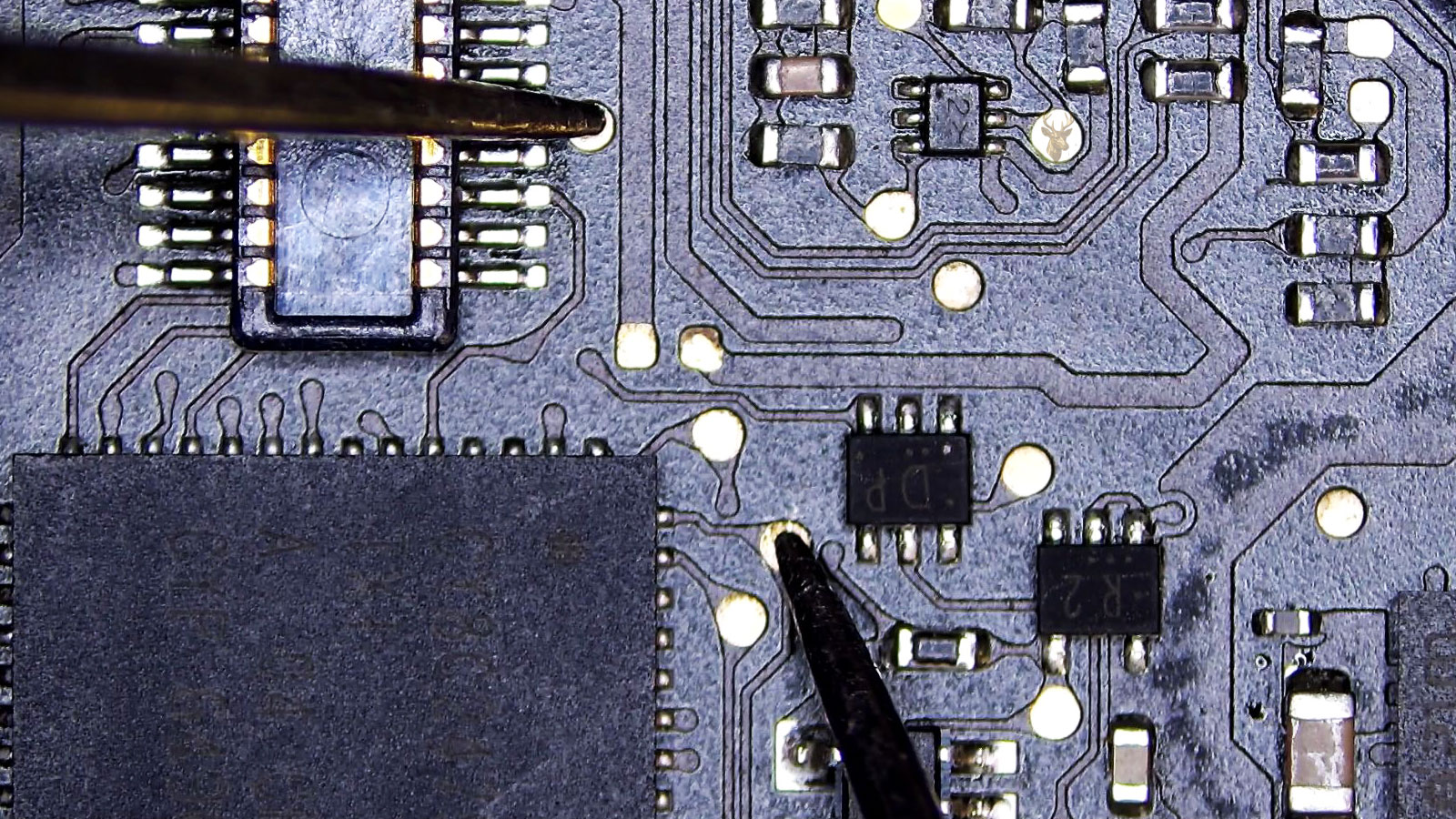
Servicing these areas may require electrical measurements, magnified inspection, connector repair, board-level soldering, or replacement of a closely matched assembly. The symptoms and circuit behavior determine where the work begins and which components require attention.
DC Jack and Power Harness Repair
Loose input jacks, burned connectors, damaged cable harnesses, and broken solder joints can prevent power from reaching the motherboard consistently. Repair may involve replacing the jack, restoring its mounting, or correcting the internal connection between the adapter and main board.
Embedded Controller and Keyboard Circuit Repair
The embedded controller manages functions such as power-on sequencing, keyboard input, battery communication, fan behavior, and sleep control. A fault in this area can produce several unrelated symptoms and may require firmware work, signal tracing, or controller replacement.
Onboard Memory and Soldered RAM Service
Computers with memory soldered directly to the motherboard can develop startup loops, graphical corruption, random crashes, or incomplete memory detection. Individual memory chips, supporting power circuits, and communication lines may need to be tested to identify the defective area.
Backlight and LCD Power Circuit Repair
A screen may remain dark even though a faint image is still present beneath the glass. Failed backlight power, damaged fuses, shorted components, cable faults, or problems within the display-voltage circuit can interrupt illumination while the computer continues running.
SATA Connector and Drive Cable Repair
Storage devices may disappear or lose communication because of a damaged motherboard socket, torn flex cable, broken adapter board, or unstable power connection. The drive can be tested separately before the internal interface is repaired or replaced.
Ethernet Port and Network Controller Repair
A wired connection that no longer detects a cable, negotiates only at reduced speed, or disconnects under light movement may involve bent contacts, damaged magnetics, cracked solder joints, or a failed network controller on the motherboard.
Irregular Responses That Point Beyond Normal Wear
Certain failures appear through inconsistent responses rather than a single obvious breakdown. Indicator patterns, changing memory totals, unstable battery readings, repeated power attempts, and unusual sleep behavior can reveal problems within circuits that control startup and communication between components.
Observing exactly when these irregularities occur can provide valuable direction during testing. A symptom that appears only after warm-up, while connected to power, or during a particular stage of startup may identify an area that would otherwise seem to operate normally.
Power Lights Flash in a Repeating Pattern
Repeated flashes from the power, battery, or keyboard indicators may represent a diagnostic code for memory, processor, graphics, firmware, or motherboard trouble. The pattern and timing can provide an important starting point when the screen remains inactive.
Installed Memory Changes Between Startups
A computer that reports different amounts of RAM from one startup to another may have a loose module, damaged socket, failing memory chip, unstable power rail, or communication fault within the motherboard.
The Charging Plug or Port Becomes Hot
Excessive heat around the adapter tip or charging connector can result from a loose electrical contact, damaged jack, incorrect charger, increased resistance, or a failing input circuit. Continued use may discolor or burn the surrounding connection.
Several Power-Button Attempts Are Needed
A machine that starts only after repeated presses may have a worn switch, damaged button cable, weak standby voltage, embedded-controller fault, or a motherboard condition preventing the normal startup command from being recognized.
Battery Percentage Jumps or Changes Abruptly
Readings that move suddenly from high to low, remain frozen, or change significantly after reconnecting the charger may indicate worn battery cells, calibration trouble, communication failure, or an unstable charging circuit.
The Computer Will Not Remain in Sleep Mode
A system that wakes immediately, turns on inside a bag, or repeatedly enters and exits sleep may be reacting to a faulty lid sensor, connected device, power-management setting, firmware problem, or embedded-controller signal.
The Computer Is Kept Organized Throughout Disassembly
Modern systems can contain several screw lengths, layered brackets, adhesive components, fragile sockets, and cables routed through narrow spaces. Keeping those parts identified and separated during service reduces the risk of misplaced hardware, pinched wiring, or incorrect pressure during reassembly.
Particular care is taken around battery connections, processor cooling, storage mounts, antenna leads, display hinges, and board-mounted connectors. Before the enclosure is closed, these areas are reviewed to make sure nothing has shifted, loosened, or become trapped beneath another component.
Findings Explained in Terms of Repair Value
Inspection may show that a damaged part can be restored, that a complete assembly must be replaced, or that an unrelated condition would limit the benefit of the proposed work. Those differences matter when comparing cost, expected durability, and the remaining usefulness of the machine.
The customer can then consider the available choices with a clearer understanding of what each one addresses. This keeps the decision centered on the likely outcome of the work rather than on replacing hardware simply because a symptom appeared.
Collection Planned Around the Size and Condition of the Equipment
A computer with a loose display, damaged enclosure, unstable power connection, or heavy tower case may require more care than an ordinary drop-off. Coordinating collection in advance makes it possible to consider how the machine should be disconnected, protected, and moved before transportation begins.
The arrangement can also account for systems located inside offices, shared work areas, or home setups where several cables and peripherals must be identified first. This reduces confusion at the repair stage and keeps equipment related to the reported problem from being left behind.
Identify the Connections Before Anything Is Removed
Photographing cable positions or labeling unfamiliar connections can be useful when a desktop, monitor array, external drive, printer, or network device must be disconnected. This makes reinstallation easier and helps preserve the original setup for later reference.
Any accessory involved in the failure should remain clearly identified. A particular adapter, power strip, video cable, external enclosure, or peripheral may be essential for determining whether the problem originates inside the computer or elsewhere in the setup.
Coverage for Homes, Shops, and Small Work Environments
Residential addresses, local businesses, and compact office settings may each present different access and transportation needs. Pickup details can be adjusted according to the location, the way the equipment is installed, and whether related items need to remain with the system for testing.
West Little River customers can request this service when the computer is difficult to carry, unsafe to move without preparation, or tied to accessories that should be examined with it. Once received, the machine can be evaluated with the original circumstances of the problem already documented.
What to Consider When the Cause Is Not Immediately Clear
Some repair concerns begin with conditions outside the operating system, including electrical surges, long periods in storage, environmental contamination, or replacement parts that affect several connected functions. Mentioning those circumstances can prevent important clues from being overlooked.
The following answers address situations where the computer may still show partial operation even though a deeper hardware or configuration problem is present. Inspection determines how far the condition has progressed and which options remain practical.
Can a computer be examined after a power surge or lightning event?
Yes. Electrical events may affect the adapter, power supply, charging circuit, motherboard, storage device, network port, or connected accessories. Even when the machine still turns on, unstable behavior afterward can indicate damage that requires electrical testing.
Can dust, insects, or other contamination damage internal parts?
Heavy debris can restrict airflow, interfere with fans, retain moisture, and create conductive paths across electronic components. Internal cleaning may reveal corrosion, nesting material, damaged wiring, or overheated areas that require additional repair.
What if the computer has been stored unused for several years?
Long-term storage can affect batteries, hard drives, cooling fans, thermal materials, internal clocks, and electrical contacts. The machine should be checked before important files are accessed or prolonged charging is attempted, particularly if the battery shows swelling or leakage.
Can overheating cause damage that remains after the computer cools down?
Repeated heat exposure can weaken solder joints, degrade batteries, damage graphics hardware, shorten storage life, and affect surrounding board components. Cleaning the cooling system may correct the temperature problem, but additional testing may be needed when instability continues afterward.
Why does the computer fail at home but appear normal elsewhere?
The difference may involve a charger, power strip, monitor, network connection, dock, peripheral, wall outlet, or environmental condition at the original location. Recording the exact setup can help determine what must be tested alongside the computer.
Can a screen replacement affect the camera, touch function, or lid sensors?
Yes. Display assemblies may share cables or mounting areas with webcams, microphones, antennas, touch controllers, and magnetic sensors. Correct part selection and careful cable routing are important when several functions pass through the same lid assembly.
A Practical Path Forward for Computer Problems
Computer failures do not always point to a single damaged component. Several unrelated conditions can produce similar symptoms, making it important to identify the underlying cause before deciding whether repair, replacement, or additional work is the most appropriate direction. Careful evaluation helps avoid unnecessary parts and focuses attention on the areas that truly require correction.
For homes and businesses throughout West Little River, service can be arranged for systems affected by electrical faults, damaged hardware, startup failures, storage issues, display problems, and other conditions that interfere with dependable operation. From the initial inspection through the completed repair, the objective is to restore reliable performance with work that matches the condition of the equipment.